
How to Prevent Grease and Food Buildup From Affecting Commercial Oven Performance
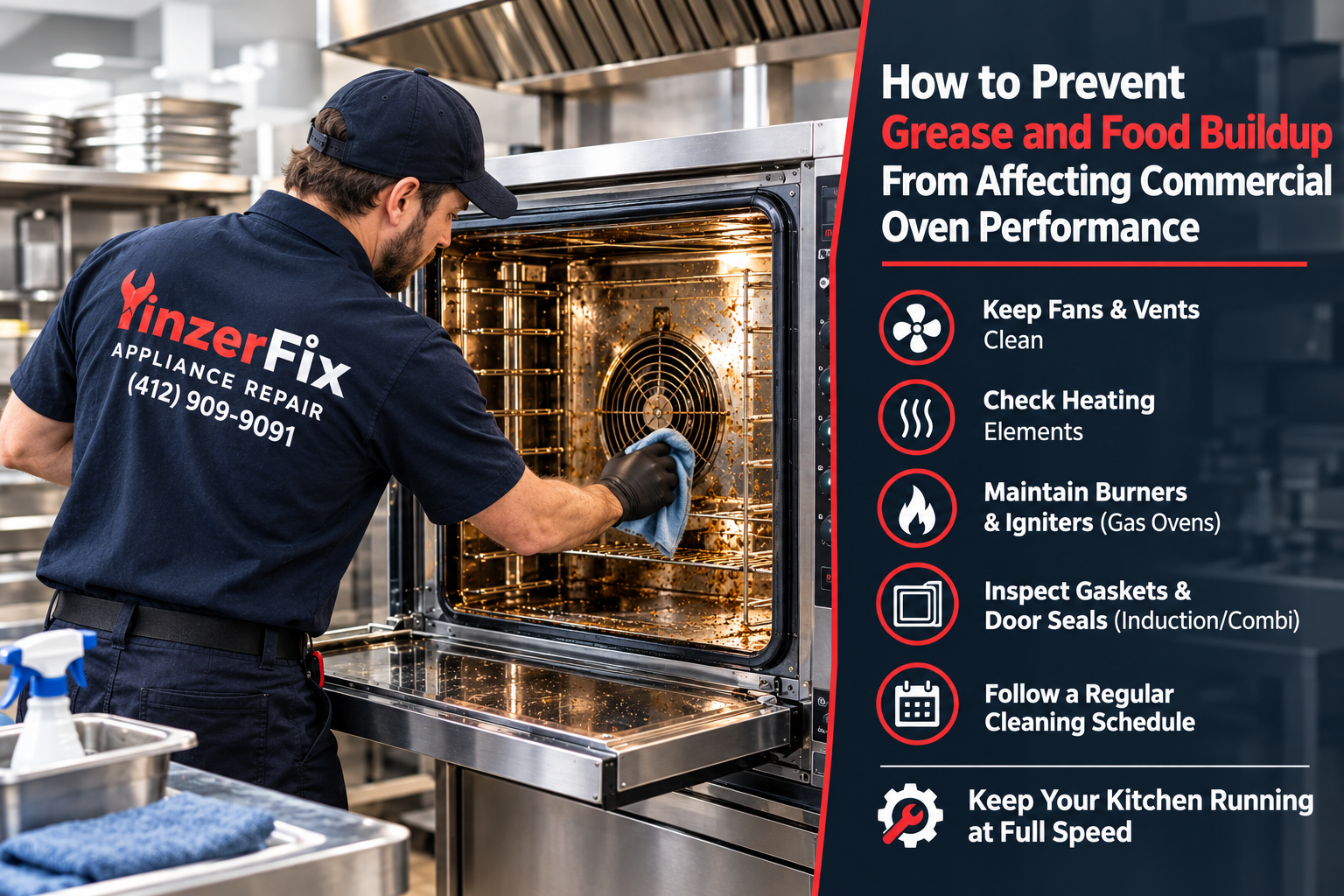
Every busy kitchen in Pittsburgh — from downtown restaurants to neighborhood cafés and catering kitchens — depends on a convection oven that heats evenly and holds temperature under pressure. But grease splatter and food debris build up fast during high-volume service, and once they coat the fan, heating elements, or interior walls, oven performance starts to slip. What looks like a minor cleaning issue today can turn into a costly commercial convection oven repair down the road.
Why Grease Buildup Is a Bigger Problem Than It Looks
Convection ovens rely on internal fans to circulate hot air evenly across every rack. When grease and baked-on food residue coat the fan blades or heating elements, airflow becomes restricted. The result is uneven cooking, longer prep times, and inconsistent food quality — problems that directly affect service speed and customer satisfaction in restaurants, bars, and commercial kitchens alike.
Warning Signs Your Oven Needs Attention
Uneven browning or hot spots on trays
Smoke or burning smell during preheat
Longer cook times than usual
A noisy or straining fan motor
Visible grease buildup on interior walls or vents
Temperature readings that don't match actual cooking results
Increased energy bills from the unit working harder than it should
Maintenance Tips by Oven Type
Different fuel types come with their own upkeep needs, so a one-size-fits-all cleaning routine rarely works well:
Gas convection ovens: Keep burner ports and igniters free of grease film, since buildup here can affect flame consistency and heating speed, not just airflow.
Electric convection ovens: Wipe down heating elements regularly, as coated elements take longer to reach temperature and can cycle inefficiently, raising energy use.
Induction and combi units: Check gaskets and door seals often, since grease residue can prevent a tight seal and let heat escape during cooking cycles.
Across all three, the fan compartment and vent system deserve extra attention. This is where debris collects out of sight and often causes the most damage over time.
Simple Habits That Extend Oven Life
Daily wipe-downs after close, a deeper interior clean weekly, and a professional inspection every few months go a long way. Many Pittsburgh restaurants, cafés, and bars build this into their closing checklist so grease never has time to bake onto surfaces. If your team hasn't scheduled a checkup recently, now is a good time — give YinzerFix a call at (412) 909-9091 or book a visit online before a small maintenance issue turns into a mid-shift breakdown.
When It's Time to Call a Professional
Routine cleaning handles surface-level buildup, but grease that's reached the fan motor, internal wiring, or heating elements usually needs a trained technician. Continuing to run the oven with restricted airflow can shorten its lifespan and lead to bigger repairs. Our commercial oven repair technicians can inspect fans, elements, and seals to catch problems early. For kitchens juggling multiple pieces of equipment, our commercial kitchen appliance repair services page covers what a full-kitchen maintenance plan can look like.
Conclusion
Grease and food buildup are easy to overlook until they start affecting cook times, food quality, and utility bills. A consistent cleaning routine, paired with periodic professional service, keeps your oven running the way it should. If your equipment is already showing warning signs, YinzerFix Appliance Repair offers same-day commercial oven repair across Pittsburgh — call (412) 909-9091 or request service online to get your kitchen back on track.
Frequently Asked Questions
1. How often should a commercial convection oven be cleaned? Most kitchens benefit from a daily wipe-down, a deeper weekly clean, and a professional inspection every few months depending on usage.
2. Can grease buildup really cause uneven cooking? Yes. When grease coats the fan or heating elements, airflow is restricted, which leads to hot spots and inconsistent results.
3. Does grease buildup affect gas and electric ovens the same way? Not exactly. Gas ovens can develop flame and ignition issues, while electric ovens may see slower heating and higher energy use as elements get coated.
4. What Pittsburgh businesses typically need commercial oven maintenance? Restaurants, cafés, bars, catering kitchens, and other commercial kitchens all rely on consistent oven performance and benefit from routine upkeep.
5. When should I call a professional instead of cleaning it myself? If buildup has reached the fan motor, wiring, or heating elements, or if you notice smoke, noise, or uneven heating after cleaning, it's time to call a technician.
Tags :
- Commercial Convection Oven Repair
- Commercial Oven Repair Pittsburgh
- Commercial Oven Repair
- Appliance Repair Pittsburgh
- Commercial Kitchen Oven Repair
- Commercial Oven Maintenance Pittsburgh
- Restaurant Oven Repair Pittsburgh
- Gas Convection Oven Repair
- Electric Convection Oven Repair
- how to prevent grease buildup in a commercial oven
- Appliance Repair
- appliance repair services