
Commercial Range Maintenance Checklist for Restaurant Kitchens
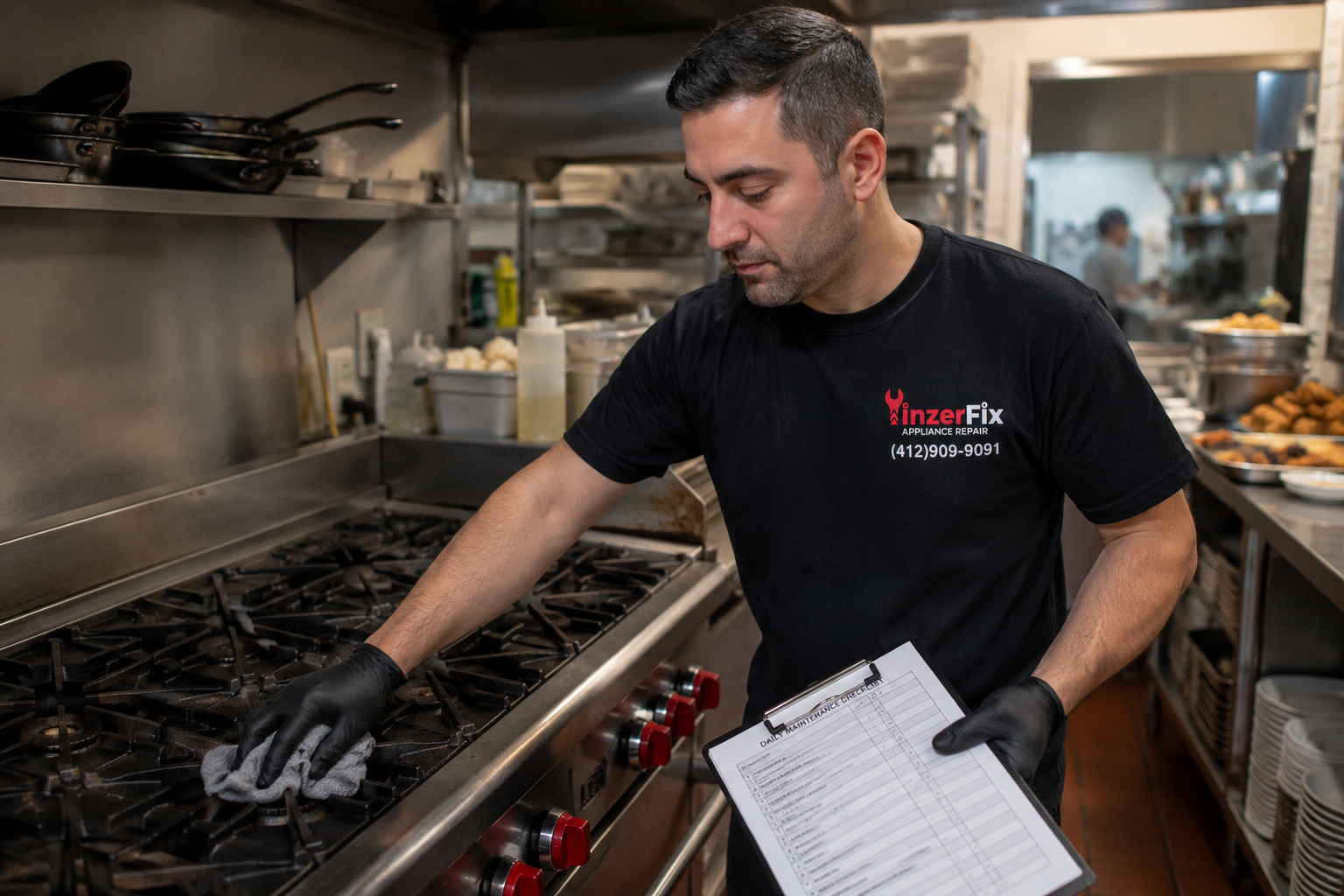
Commercial ranges are among the hardest-working appliances in any restaurant kitchen. From preparing breakfast orders to handling dinner rushes, these units operate for hours every day. Without proper maintenance, even a minor issue can lead to costly downtime, inconsistent cooking performance, and unexpected repair expenses. At YinzerFix Appliance Repair, we provide same day repair service to help Pittsburgh restaurants keep their kitchens running efficiently.
This commercial range maintenance checklist can help restaurant owners and kitchen managers reduce breakdowns, extend equipment lifespan, and maintain safe operations.
Why Commercial Range Maintenance Matters
Routine maintenance offers several benefits for busy restaurant kitchens:
Reduces unexpected equipment failures
Improves cooking consistency
Extends the life of the range
Helps lower energy consumption
Minimizes costly emergency repairs
Improves kitchen safety
Following a structured maintenance schedule can significantly reduce the need for major repairs throughout the year.
Commercial Range Maintenance Checklist
1. Daily Maintenance Tasks
Daily cleaning and inspection help prevent grease buildup and performance issues.
Check and Clean Burners
Remove food debris from burner ports.
Ensure flames burn evenly and consistently.
Watch for yellow or irregular flames.
Wipe Cooking Surfaces
Clean grates, drip trays, and cooktops.
Remove grease and food residue after each shift.
Inspect Control Knobs
Verify all controls operate smoothly.
Report any loose or damaged knobs immediately.
Check for Gas Odors
Never ignore unusual gas smells.
Schedule professional service if a leak is suspected.
2. Weekly Maintenance Tasks
Weekly inspections help identify developing problems before they affect kitchen operations.
Deep Clean Burner Assemblies
Remove and clean burner heads thoroughly.
Clear clogged ports that can affect flame quality.
Inspect Pilot Lights
Ensure pilot lights remain stable.
Address frequent outages promptly.
Clean Grease Collection Areas
Empty grease trays and collection pans.
Prevent fire hazards caused by grease accumulation.
Inspect Door Hinges and Handles
Check for loose hardware or excessive wear
3. Monthly Maintenance Tasks
Monthly maintenance focuses on performance and operational efficiency.
Inspect Gas Connections
Look for signs of wear or corrosion.
Addressing signs of developing gas system issues early can help prevent larger safety and performance concerns.
Ensure connections remain secure.
Check Temperature Accuracy
Verify cooking temperatures remain consistent.
Address overheating or underheating issues.
Inspect Ignition Systems
Test ignition performance.
Schedule service if ignition becomes unreliable.
Examine Ventilation Performance
Ensure heat and smoke are being properly exhausted.
Clean surrounding areas to improve airflow.
4. Quarterly Maintenance Tasks
Quarterly inspections help identify larger issues that could lead to equipment failure.
Inspect Internal Components
Check burners, valves, regulators, and gas lines.
Look for signs of wear or damage.
Test Safety Features
Verify safety shut-off systems operate correctly.
Evaluate Energy Efficiency
Monitor fuel consumption trends.
Address declining efficiency before operating costs increase.
Review Overall Performance
Note unusual noises, delayed ignition, or uneven heating.
5. Annual Professional Maintenance Checklist
Restaurant kitchens should schedule professional service at least once per year.
A qualified technician should:
Perform a complete safety inspection
Test gas pressure levels
Inspect regulators and valves
Verify burner performance
Examine electrical components
Calibrate temperature controls
Identify worn parts before failure occurs
Professional maintenance often prevents the need for extensive Commercial Gas Range Repair later.
Warning Signs Your Commercial Range Needs Repair
Even with regular maintenance, equipment may eventually require service. Persistent slow heating performance is often one of the earliest indicators that a commercial range requires professional attention.
Watch for these warning signs:
Uneven cooking temperatures
Burners that fail to ignite
Yellow or flickering flames
Unusual gas odors
Excessive energy usage
Strange noises during operation
Frequent shutdowns
Addressing these problems early can often prevent expensive repairs and kitchen downtime.
Common Maintenance Mistakes to Avoid
Many restaurant operators unintentionally shorten equipment lifespan by making avoidable mistakes.
Avoid:
Skipping routine cleaning schedules
Ignoring small performance issues
Using abrasive cleaning chemicals
Delaying professional inspections
Attempting complex gas system repairs without training
When problems involve gas components, professional Gas Range Repair is always the safest option.
When to Schedule Professional Service
Contact a technician if you notice:
Persistent ignition problems
Gas leaks or unusual odors
Significant temperature fluctuations
Frequent burner failures
Reduced cooking performance
For restaurants experiencing these issues, prompt Commercial Range Repair Pittsburgh services can help minimize disruptions and restore equipment reliability.
Keep Your Restaurant Kitchen Running Efficiently
A consistent Commercial Range Maintenance program can help restaurant owners reduce downtime, improve safety, and extend equipment lifespan. By following daily, weekly, monthly, and annual maintenance schedules, restaurant kitchens can avoid many common breakdowns while keeping essential kitchen equipment operational throughout the year.
When professional assistance is needed, YinzerFix Appliance Repair provides expert gas range repair service and commercial equipment support for restaurants throughout Pittsburgh.
Conclusion
Commercial ranges play a critical role in restaurant productivity and food quality. Implementing a proactive maintenance routine helps prevent breakdowns, improves efficiency, and supports a safer kitchen environment. With regular inspections and timely repairs, restaurant owners can maximize equipment performance and reduce costly disruptions. When professional service is required, YinzerFix Appliance Repair is ready to help keep your kitchen operating at its best.
Frequently Asked Questions
Q1. What is the biggest cause of commercial range wear and tear?
Grease buildup, heavy daily use, and missed maintenance are the most common causes of premature component failure.
Q2. Should restaurant staff perform commercial range maintenance?
Staff can handle routine cleaning and visual inspections, but technical maintenance should be left to qualified technicians.
Q3. How can I improve the efficiency of my commercial range?
Keep burners clean, maintain proper ventilation, and schedule regular inspections to ensure optimal performance.
Q4. Does preventative maintenance help reduce kitchen downtime?
Yes, Regular maintenance helps identify minor issues before they lead to unexpected equipment failures.
Q5. Are commercial ranges safe to operate without regular inspections?
Skipping inspections can increase the risk of performance issues, gas-related problems, and costly emergency repairs.