
Why Your Refrigerator is Not Cooling and How to Fix it Quickly
A refrigerator that suddenly stops cooling can quickly become a stressful situation. Food begins spoiling, temperatures rise, and the appliance may start running constantly without keeping anything cold. In many cases, refrigerators show warning signs before they stop cooling completely. You may notice uneven temperatures, unusual noises, slow ice production, or the refrigerator running longer than normal.
At YinzerFix Appliance Repair, we provide dependable appliance repair services in Pittsburgh and help homeowners throughout Pittsburgh diagnose and repair refrigerator cooling problems quickly before they turn into expensive appliance failures.
Dirty Condenser Coils
Dirty condenser coils are one of the most common reasons refrigerators struggle to stay cold.
Over time, dust, dirt, and pet hair build up around the coils, making it harder for heat to escape properly. As a result, the refrigerator has to work harder to maintain the correct temperature.
Signs of dirty coils may include:
Weak cooling
Higher energy bills
Refrigerator running constantly
Warm refrigerator temperatures
Cleaning condenser coils every few months can help improve cooling performance and reduce strain on the appliance.
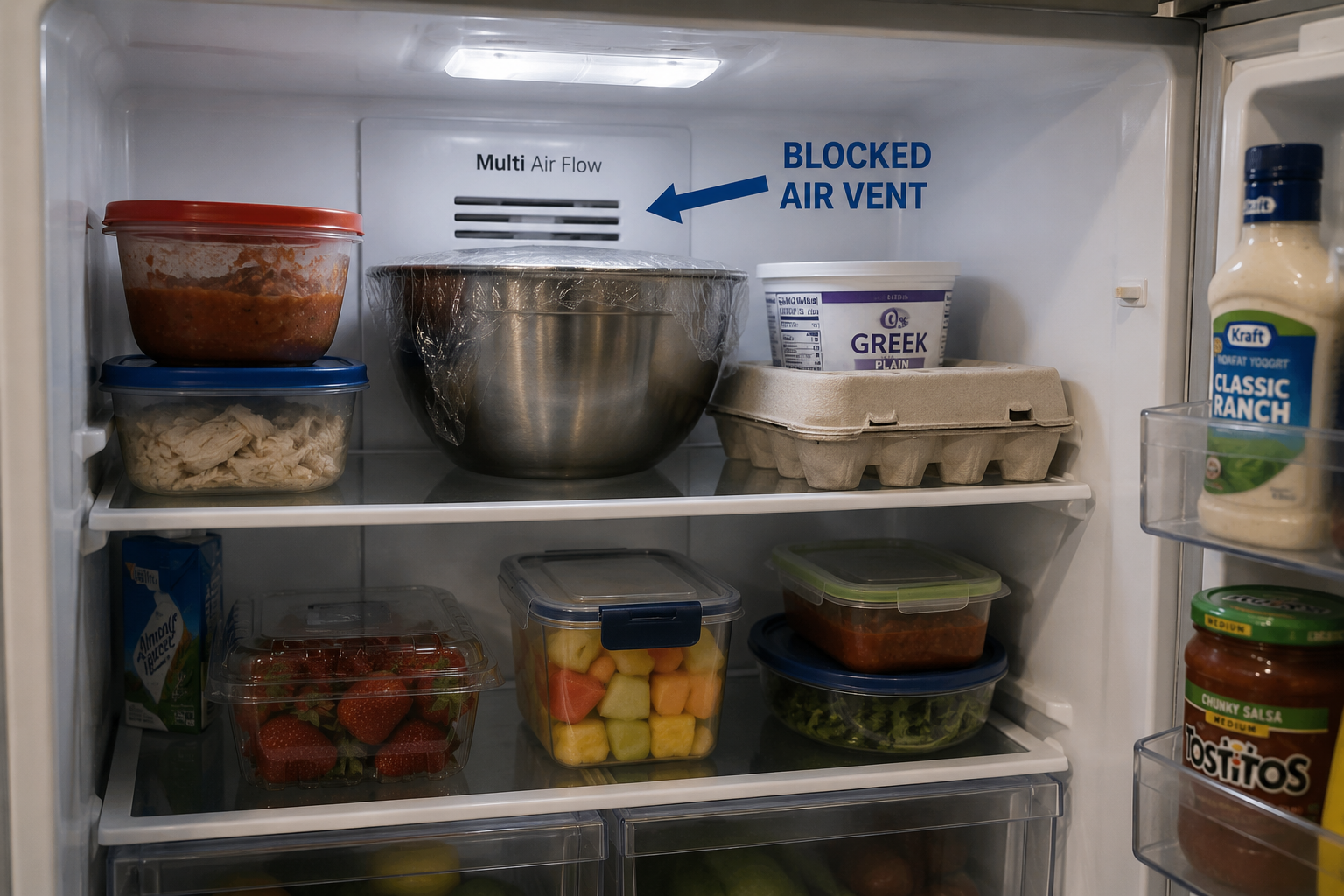
Blocked Air Vents
Proper airflow is important for maintaining even cooling throughout the refrigerator.
When food containers block air vents, cold air cannot circulate correctly. Some areas may stay cold while others become noticeably warmer. This problem is especially common in overcrowded refrigerators.
To improve airflow:
Avoid overpacking shelves
Keep vents clear
Organize food properly
Faulty Thermostat Problems
The thermostat controls the refrigerator’s cooling temperature.
If the thermostat stops working correctly, the appliance may:
Struggle to stay cold
Run continuously
Cool unevenly
Freeze food unexpectedly
Sometimes adjusting the settings can solve the issue temporarily, but persistent cooling problems may require professional refrigerator repair service.
Evaporator Fan Issues
The evaporator fan helps move cold air between the freezer and refrigerator compartments. When the fan fails, the freezer may remain cold while the refrigerator section becomes warm.
Common signs include:
Weak airflow
Unusual noises
Uneven cooling
Warm refrigerator temperatures
Repairing fan problems early can help prevent larger cooling system failures.
Compressor Failure
The compressor is one of the most important parts of the refrigerator cooling system.
If the compressor begins failing, the refrigerator may:
Stop cooling completely
Struggle to maintain temperature
Make loud noises
Cycle constantly
Compressor problems usually require professional diagnosis because they involve complex mechanical and electrical components. Understanding common refrigerator problems can help homeowners recognize early warning signs before complete appliance failure occurs.
Simple Troubleshooting Steps Homeowners Can Try
Before scheduling repair service, homeowners can try a few basic troubleshooting steps.
Helpful Refrigerator Troubleshooting Tips
Check temperature settings
Clean condenser coils
Make sure air vents are not blocked
Inspect door seals for leaks
Avoid overcrowding the refrigerator
These simple steps can sometimes improve cooling performance and prevent future problems.
When to Call a Refrigerator Repair Technician
Some cooling issues require professional repair.
You should contact a technician if:
The refrigerator stops cooling completely
Food spoils rapidly
Loud compressor noises continue
Electrical issues appear
Troubleshooting does not solve the problem
Fast repair service can help prevent larger appliance damage and reduce food loss.
Preventing Future Refrigerator Cooling Problems
Routine maintenance can help reduce future cooling issues and improve refrigerator efficiency.
Maintenance Tips
Clean condenser coils regularly
Keep vents clear
Check door seals often
Maintain proper temperature settings
Schedule repairs early when problems appear
Preventative maintenance helps refrigerators operate more efficiently and last longer.
Schedule Refrigerator Repair in Pittsburgh
If your refrigerator is not cooling properly, YinzerFix Appliance Repair is ready to help. We provide reliable refrigerator repair services for homeowners throughout Pittsburgh and surrounding areas. Our experienced technicians diagnose cooling problems quickly and complete dependable repairs using quality replacement parts.
Whether you need help with compressor issues, blocked airflow, thermostat problems, or faulty fans, our local Pittsburgh team is here to restore your refrigerator as quickly as possible. Schedule refrigerator repair with our experienced Pittsburgh appliance repair team today.
Frequently Asked Questions
1. Why is my refrigerator running but not cooling?
This is often caused by dirty condenser coils, thermostat problems, blocked airflow, or compressor issues.
2. How often should refrigerator condenser coils be cleaned?
Condenser coils should generally be cleaned every six months to help maintain proper cooling efficiency.
3. Can blocked air vents cause my refrigerator to stop cooling?
Yes. Blocked air vents restrict airflow inside the refrigerator and can lead to uneven cooling.
4. What are the signs of a faulty refrigerator thermostat?
Common signs include inconsistent temperatures, food spoiling quickly, or the refrigerator running constantly.
5. Why is my freezer cold but the refrigerator not cooling?
This usually happens when the evaporator fan is not circulating cold air properly into the refrigerator section.
6. What should I do first if my refrigerator stops cooling?
Start by checking the temperature settings, cleaning the condenser coils, inspecting the door seals, and making sure vents are clear.
7. When should I call a professional for a refrigerator not cooling issue?
If basic troubleshooting does not fix the problem or you suspect compressor or electrical issues, professional repair service is recommended.
8. How can I prevent refrigerator cooling problems in the future?
Regular maintenance, clean condenser coils, proper airflow, and timely repairs can help prevent most refrigerator cooling issues and extend appliance life.