
Why Does Condensation Build Up Around a Commercial Sandwich Prep Table?
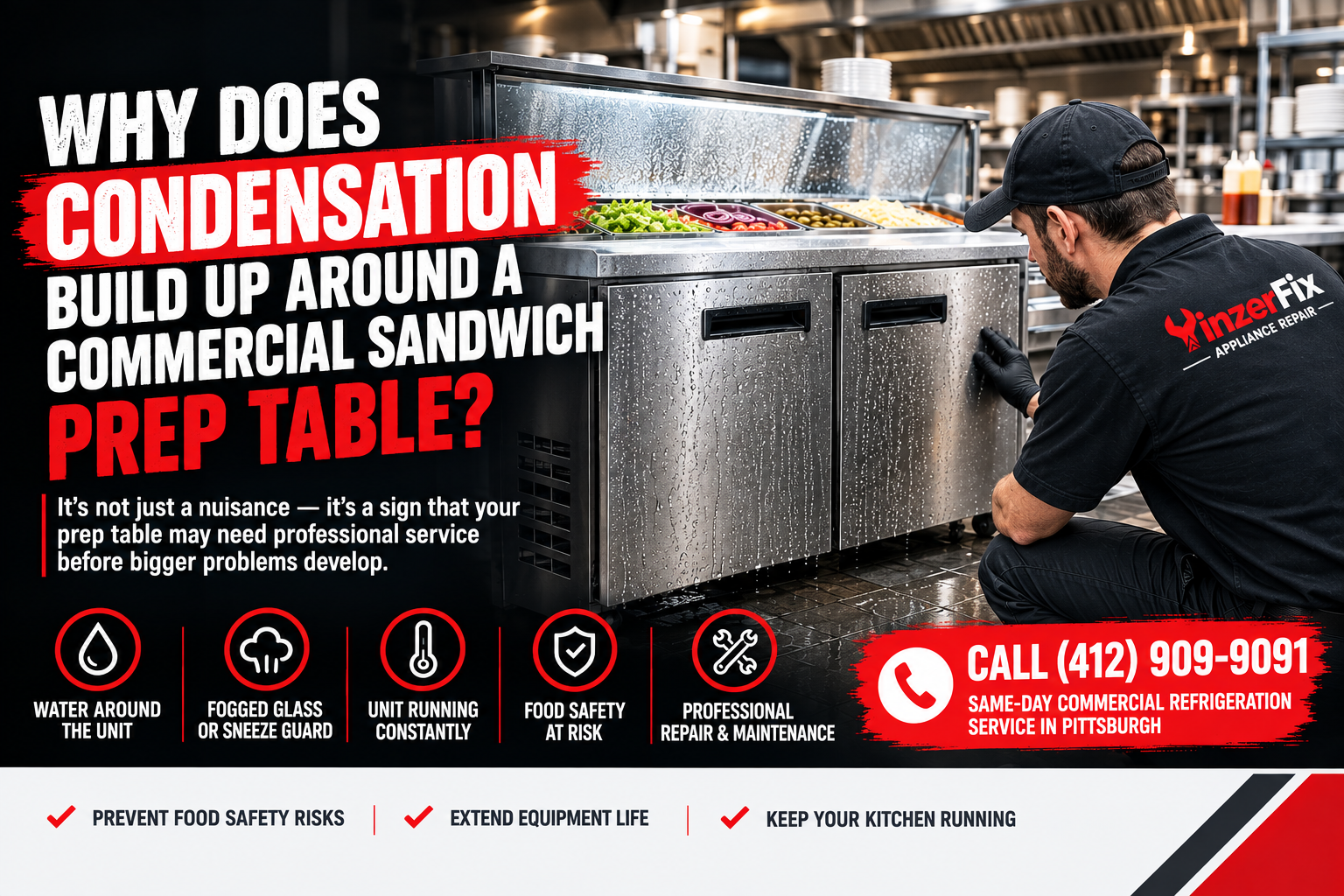
Walk into almost any Pittsburgh restaurant, deli, café, or pizza shop during a lunch rush, and you'll find a sandwich prep cooler working overtime. These units are built to keep toppings cold while staff assembles orders quickly, but many operators eventually notice something they can't quite explain: beads of moisture, fogged surfaces, or small puddles forming around the unit. That moisture isn't just cosmetic. It's usually the first visible clue that a refrigerated prep table repair may be needed before the problem grows into a bigger equipment failure.
If your kitchen is dealing with this issue right now, don't wait for it to get worse — call (412) 909-9091 or book a service visit online and a technician can take a look before your next shift.
What Causes Moisture Around a Sandwich Prep Cooler?
Condensation forms when warm, humid kitchen air meets a cold surface. A small amount of moisture on a chilled cutting board rail is normal, especially in a busy, steamy kitchen. But when sweating becomes constant, spreads to the exterior panels, or leaves water on the floor, it usually points to one of the following:
Worn or torn door gaskets that no longer seal tightly, letting warm air pull into the cabinet
Dirty condenser coils coated in Refrigerated Prep Table Repair grease and dust, which reduces the unit's ability to reject heat
A failing evaporator fan motor that can't circulate cold air evenly through the cabinet
Low refrigerant levels from a slow leak, which weakens the cooling cycle
A malfunctioning thermostat or temperature control board causing the compressor to short-cycle
Blocked drain lines that back up condensate instead of routing it away
Overloaded prep pans stacked above the fill line, which trap air and block proper airflow
Each of these issues puts extra strain on the compressor, and in commercial kitchens that run 10, 12, or even 16 hours a day, that strain adds up fast.
Why This Matters for Food Safety, Not Just Comfort
A commercial refrigerated sandwich prep table isn't just convenient — it's a food safety tool. Deli meats, cheeses, sauces, and produce sitting in the rail need to stay at or below 41°F to stay within safe holding temperatures. When condensation appears alongside a warmer-than-normal cabinet, it's often a sign the unit is losing its ability to hold temperature consistently, which can put your kitchen at risk during a health inspection.
Signs It's Time for Commercial Prep Table Repair
Watch for these patterns before they turn into a shutdown during service:
Water collecting under or around the base of the unit
Fogged or sweating glass on sneeze guards
The compressor running constantly without cycling off
Toppings feeling soft or warmer than usual
Frost buildup inside the cabinet or on the evaporator coil
Unusual humming, clicking, or rattling from the compressor area
Simple Maintenance That Helps Prevent Condensation
A lot of sweating problems can be reduced with routine upkeep. We recommend that restaurants, cafés, bars, and commercial kitchens across Pittsburgh build these habits into their weekly cleaning routine:
Wipe down and inspect door gaskets for cracks or gaps
Vacuum condenser coils monthly to keep airflow clear
Avoid propping doors open longer than necessary during prep
Keep pans filled to the recommended line, not overloaded
Give the unit a few inches of clearance from walls for proper ventilation
Routine care goes a long way, but once components like gaskets, fan motors, or refrigerant lines start failing, DIY fixes usually only mask the symptom. That's when it makes sense to bring in a technician who works on commercial refrigeration daily, rather than risk further damage to the compressor. If your kitchen relies on more than one piece of cold-holding equipment, it's also worth reviewing our broader commercial kitchen appliance repair services to keep everything running on the same maintenance schedule.
Conclusion
Condensation around a sandwich prep cooler is rarely just a cosmetic nuisance — it's usually an early warning sign from the refrigeration system. Catching it early with professional Commercial Prep Table Repair can protect food safety, extend the life of your equipment, and keep your line moving during busy service. If your prep table is sweating, running warm, or struggling to hold temperature, our team serves restaurants, delis, bars, and commercial kitchens throughout Pittsburgh and can usually get a technician out the same day.
Frequently Asked Questions
1. Is a little condensation on a prep table normal?
A small amount can happen in humid kitchens, but constant sweating, pooling water, or fogged glass usually signals a mechanical issue that needs attention.
2. Can dirty condenser coils really cause condensation?
Yes. Dirty coils make the compressor work harder and less efficiently, which can lead to inconsistent cooling and moisture buildup around the cabinet.
3. How often should door gaskets be replaced?
Gaskets typically need replacement every one to two years in high-use commercial kitchens, though heavy daily use can wear them out sooner.
4. What temperature should a sandwich prep table hold?
Most health codes require cold-holding units to stay at or below 41°F to keep food safe.
5. Should I keep using the prep table while waiting for repair?
If food is holding above safe temperatures, it's best to move perishable items to a working cooler and have the unit inspected before continued use.