
Why Does a Commercial Oven Shut Off Before the Cooking Cycle Is Complete?
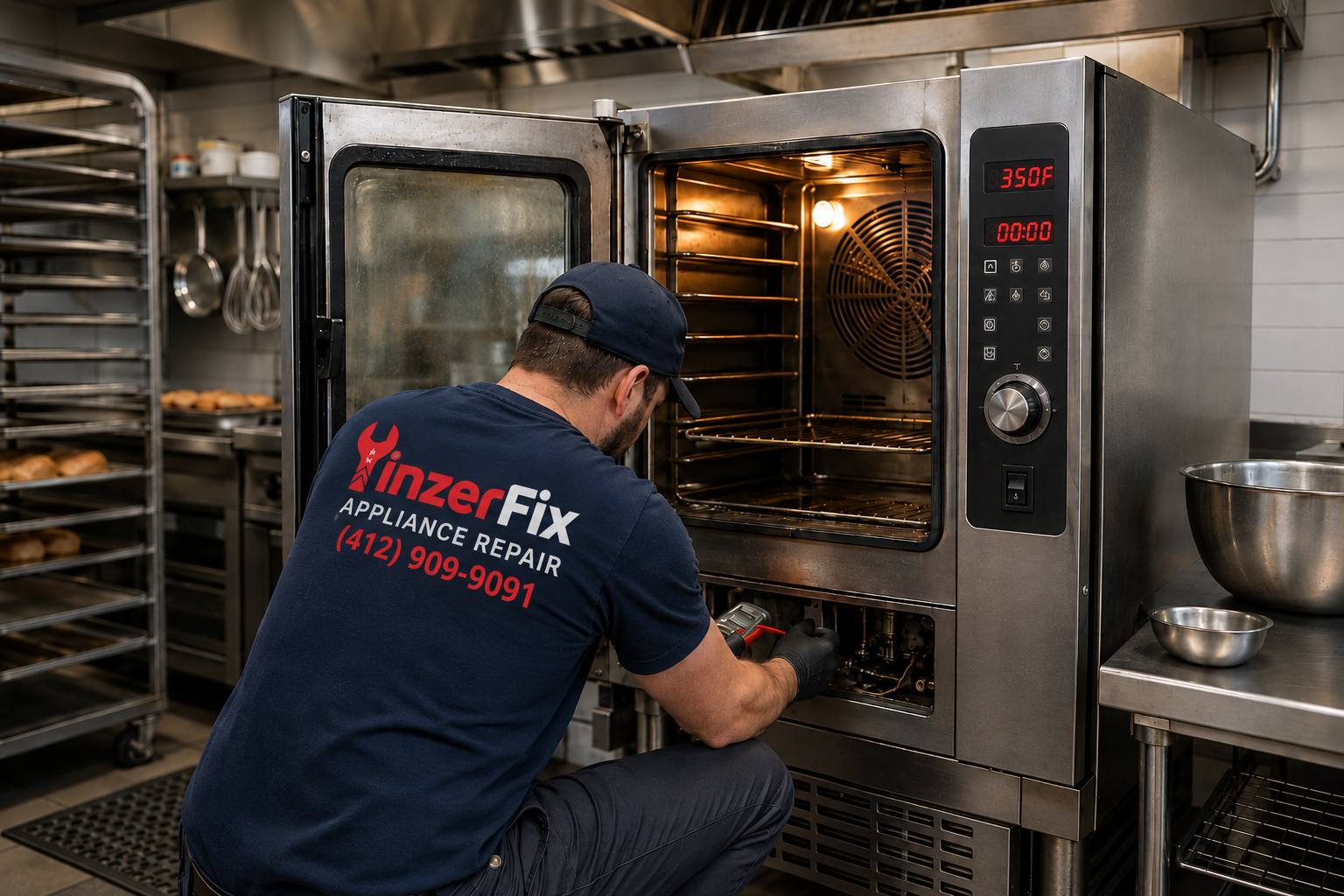
A commercial oven that powers down mid-bake is more than an inconvenience — it can ruin a full batch of product, delay tickets, and throw off an entire prep schedule. For restaurants, bakeries, and catering kitchens across Pittsburgh, an oven that won't finish its cycle usually points to a specific mechanical or electrical fault rather than random bad luck. Understanding what's behind the shutdown helps kitchen managers decide whether it's a quick fix or a job for a trained technician.
Why Timing Matters More Than It Seems
When a commercial oven cuts off early, food is left undercooked, unevenly browned, or has to be restarted from a cold or partially warmed state — which rarely produces the same result. In a high-volume kitchen, that means wasted ingredients, longer ticket times, and inconsistent plating that customers notice. A single unreliable unit can quietly cost a kitchen more in wasted product over a month than a repair bill would.
Common Reasons an Oven Shuts Off Mid-Cycle
Different oven types tend to fail in different ways, so the cause often depends on what kind of unit you're running:
Gas ovens: A weak or failing thermocouple or flame sensor can cause the gas valve to close as a safety measure, even if the flame looks fine to the eye. Igniter wear and gas pressure fluctuations are also common culprits.
Electric ovens: A cracked or burned-out heating element, a failing temperature sensor, or a tripped high-limit safety switch can all interrupt a cycle before it's supposed to end.
Convection ovens: Since these units rely on a fan to circulate hot air, a failing blower motor or overheating fan relay can trigger a safety shutoff, and calls for commercial convection oven repair are often traced back to airflow problems rather than the heating source itself.
Control board issues: On any oven type, a glitching control board or worn door switch can misread the cycle and cut power early, especially in units that see heavy daily use.
Overheating from blocked vents: Grease buildup or blocked exhaust can cause internal temperatures to spike, prompting an automatic safety shutdown.
Warning Signs Worth Watching
Oven shuts off at roughly the same point in every cycle
Food comes out undercooked despite a full timer setting
Unusual clicking, humming, or fan noise before shutdown
Door doesn't seal tightly or the switch feels loose
Burnt or scorched smell near the vents or control panel
Temperature display resets or flickers during use
If any of these sound familiar, it's worth having the unit looked at before it fails completely during a dinner rush. Give us a call at (412) 909-9091 or book a repair online — our technicians can usually narrow down the cause the same day.
Maintenance That Helps Prevent Mid-Cycle Shutoffs
Routine care won't fix a failed sensor or motor, but it does reduce how often these problems show up in the first place. Cleaning grease from vents and fan housings, checking door gaskets for gaps, and having gas connections inspected periodically all help ovens run a full cycle reliably. For convection units specifically, keeping the fan blades and motor housing free of debris goes a long way toward preventing overheating shutdowns.
Who We Help Across Pittsburgh
From bakeries baking multiple rounds a day to restaurant kitchens running convection ovens through dinner service, and catering operations that can't afford a delayed batch, we work with commercial kitchens of every size across the Pittsburgh area — including cafés, bars with kitchen service, and full-scale restaurant operations.
When to Call a Commercial Oven Repair Technician
If cleaning and basic checks don't resolve the shutdowns, it's time for a professional diagnosis. YinzerFix Appliance Repair provides Commercial Oven Repair for convection, deck, conveyor, and combination ovens throughout Pittsburgh. We also work on the broader lineup of commercial kitchen equipment restaurants depend on, so recurring oven issues can often be addressed alongside other equipment checks in the same visit.
Conclusion
An oven that shuts off before the cycle finishes is rarely a coincidence — it's usually a sensor, motor, or safety switch doing exactly what it's designed to do in response to a real problem. Catching it early prevents wasted product and unplanned downtime. If your oven keeps cutting out mid-cycle, contact YinzerFix Appliance Repair at (412) 909-9091 or schedule service online for dependable commercial oven repair across Pittsburgh(Commercial Oven Repair Pittsburgh).
Frequently Asked Questions
1. Why does my gas commercial oven shut off even though the flame looks normal?
A failing thermocouple or flame sensor can cause the safety valve to close even when the flame appears steady, since the sensor itself may be misreading the signal.
2. Is a mid-cycle shutoff always a safety feature working correctly?
Often, yes — most modern commercial ovens are designed to shut down automatically when a sensor detects an unsafe condition, which is why the root cause needs to be diagnosed rather than just reset.
3. Can a dirty oven cause it to shut off unexpectedly?
Yes. Grease buildup near vents or fan housings can cause overheating, which triggers automatic safety shutoffs in both convection and standard ovens.
4. How is convection oven troubleshooting different from a standard oven?
Convection ovens depend on a functioning fan and motor for even heat distribution, so airflow-related failures are a more common cause of mid-cycle shutdowns than with standard radiant ovens.
5. How often should a commercial oven be professionally inspected?
Most restaurant kitchens benefit from a professional inspection at least once or twice a year, or sooner if shutdowns or uneven cooking become noticeable.
Tags :
- commercial oven repair Pittsburgh
- commercial convection oven repair
- commercial oven repair
- oven shutting off mid cycle
- commercial oven troubleshooting Pittsburgh
- why does my commercial oven shut off mid cycle
- commercial oven turns off before food is done
- how to fix a commercial oven that shuts off early
- commercial oven repair for restaurants Pittsburgh
- commercial oven safety switch tripping repeatedly
- gas commercial oven shutting off during cooking