
Residential Microwave Installation: How to Pick the Right Size | YinzerFix
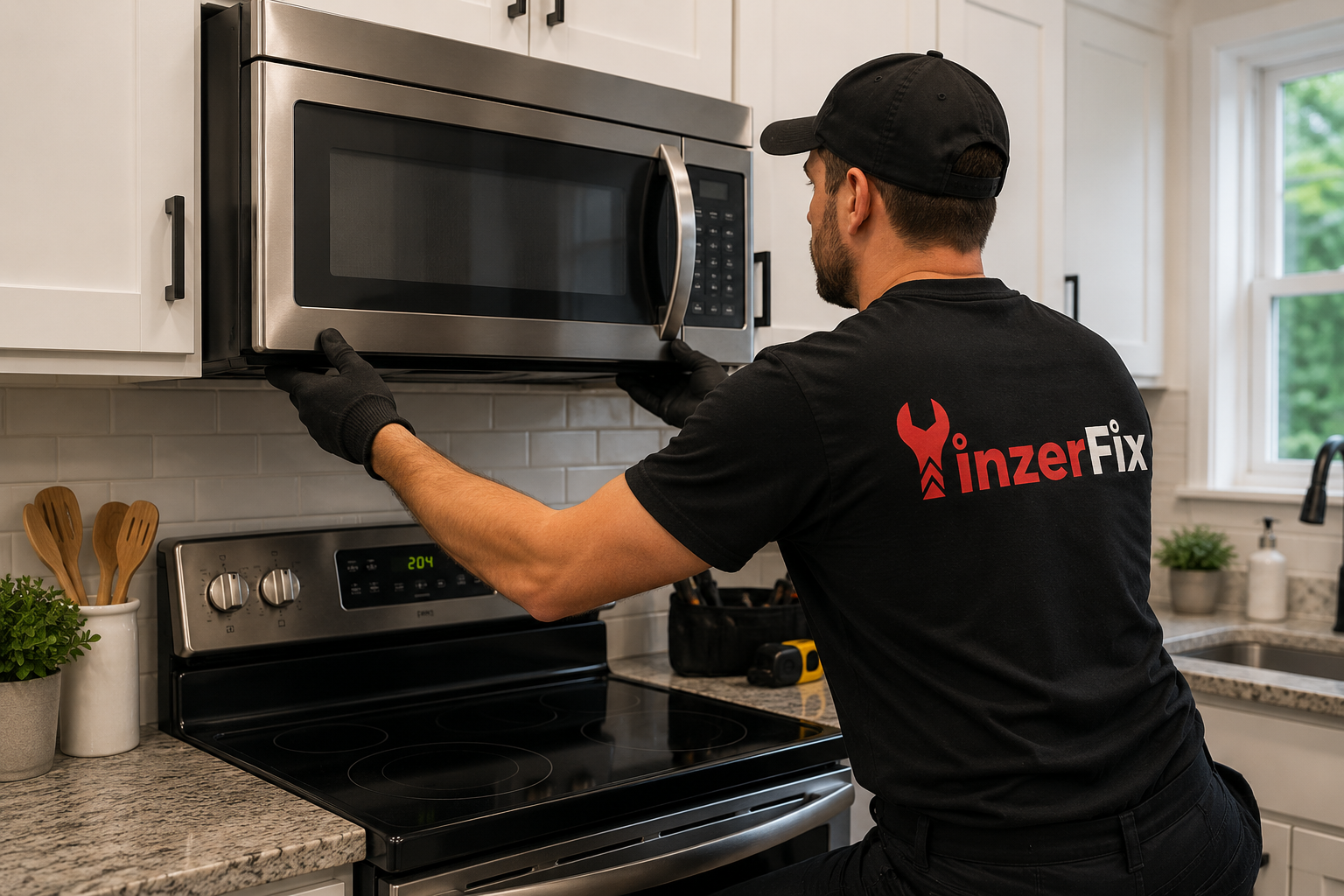
Homeowners across Pittsburgh often assume buying a new microwave is as simple as picking whatever fits the budget. In reality, size mismatches are one of the most common reasons a new unit doesn't fit the cabinet opening or vent properly on move-in day. Before you buy, it helps to understand how kitchen layout, cabinet space, and ventilation needs affect your choice — and why professional installation matters just as much as the appliance itself.
Why Microwave Size Matters More Than You Think
A microwave that's too large can crowd your counter or refuse to slide into an existing cabinet cutout. One that's too small can leave gaps, expose wiring, or look out of place above the range. Getting the dimensions right the first time saves you a return trip to the store and prevents a rushed, unsafe setup.
Measure Before You Shop
Before choosing a new appliance, measure the following:
Width, height, and depth of the existing cabinet opening or countertop area
Distance between upper cabinets if you're adding a built-in unit
Clearance above your range for venting, if you're considering an over-the-range model
Outlet location and electrical capacity near the installation point
Countertop, Built-In, or Over-the-Range?
Each style suits a different kitchen layout, and the right one often depends on how much counter and cabinet space you're working with.
Countertop models are the easiest to swap but take up valuable prep space
Built-in Microwave Installation works well when you want a flush, cabinet-integrated look and have the wall space to spare
Over the Range Microwave Installation frees up counter space entirely but requires proper venting and secure wall mounting
Kitchens in older Pittsburgh homes, condos, and newer builds all have different cabinet standards, so a size that works for one house may not work next door.
Common Installation Mistakes Homeowners Run Into
Ordering a unit before confirming the cutout size
Ignoring electrical requirements for higher-wattage models
Ignoring the fact that older Pittsburgh homes may not have the right electrical setup, causing tripped breakers after installation
Reusing old mounting brackets that don't match the new appliance's weight or shape
If you're unsure which size or style fits your kitchen, don't guess — call (412) 909-9091 and our team can walk you through measurements over the phone before you even buy the unit.
Why Professional Microwave Installation Matters
Improper mounting is one of the leading causes of early appliance failure and, in worse cases, fire hazards near the range. A trained technician confirms electrical load, secures venting for over-the-range units, and double-checks clearance so the appliance performs safely for years. For homeowners planning a kitchen update, our Microwave Installation team handles everything from measuring to mounting.
Conclusion
Picking the right microwave size starts with knowing your kitchen's dimensions and how you want the appliance to function — countertop convenience, a built-in look, or over-the-range space savings. When you're ready to install, trust our Residential Microwave Installation team to get the fit, venting, and wiring right the first time.
Frequently Asked Questions
1. How do I know if I need a built-in or countertop microwave?
If you have an existing cabinet cutout, a built-in model keeps the flush look. If not, a countertop unit is the simpler option.
2. Do over-the-range microwaves need special venting?
Yes, most models require ductwork or a recirculating vent kit to safely handle heat and smoke from the range below.
3. Can I install a bigger microwave in my existing cutout?
Not without modifying the cabinet. It's best to measure carefully or consult a technician first.
4. How long does professional microwave installation take?
Most residential installations are completed within one to two hours, depending on electrical and venting needs.
5. Should I replace my microwave's outlet when upgrading?
If the new unit has higher wattage, an electrical check is recommended to avoid overloaded circuits.
Tags :
- Residential Microwave Installation
- Built-in Microwave Installation
- Over-the-Range Microwave Installation
- Microwave Installation
- kitchen appliance installation Pittsburgh
- rawer microwave installation
- New Microwave Installation
- Over the Range Microwave Installation
- Built in Microwave Installation
- Home Appliance Installation