
Residential Ice Maker Repair: How to Identify and Fix Common Ice Maker Problems
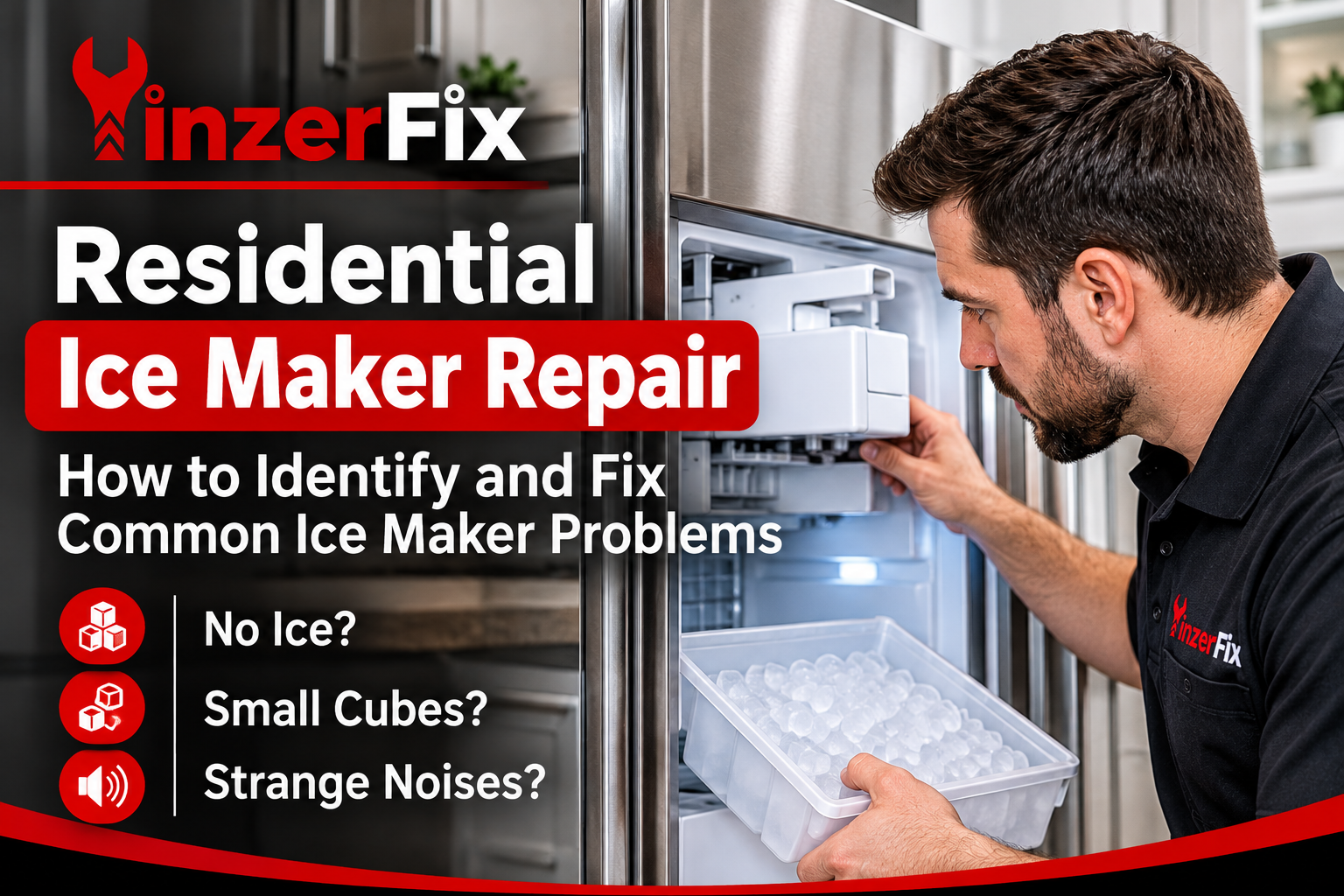
When your freezer stops producing cubes, residential ice maker repair becomes the fastest way to get your kitchen back to normal. Most ice maker problems come from a small number of causes: a frozen water line, a clogged filter, a faulty inlet valve, or a failed sensor. This guide explains how to identify each issue, which fixes are safe to try at home, and when to bring in a professional technician from YinzerFix® Appliance Repair.
The most common causes of a home ice maker not working are low water pressure, a clogged or expired water filter, a frozen fill tube, a defective water inlet valve, and a malfunctioning ice maker assembly. Freezer temperatures above 5°F can also stop ice production. Checking these five areas in order solves the majority of cases.
Signs You Need Residential Ice Maker Repair
Catching trouble early prevents leaks and food spoilage. Watch for these warning signs:
No ice production or a bin that stays empty for more than 24 hours
Small, hollow, or misshapen cubes that point to low water flow
Ice that tastes or smells off, often a sign of an old filter or freezer odors
Clumped or fused ice caused by temperature swings or melting and refreezing
Water leaking from the dispenser or pooling under the refrigerator
Loud grinding or clicking from the ice maker or dispenser
If you notice more than one of these symptoms, schedule a professional ice maker diagnosis rather than guessing.
How to Troubleshoot an Ice Maker That Is Not Making Ice
Before you call a technician, run through this simple checklist. Always unplug the refrigerator or switch off the ice maker before touching internal parts.
Check the Ice Maker Power Switch and Arm
It sounds basic, but a bumped switch or a raised wire arm is a frequent culprit. Make sure the ice maker is set to "on" and the shutoff arm is lowered. A raised arm tells the unit the bin is full.
Confirm the Freezer Temperature
Ice makers need a freezer set at 0°F to 5°F. Use an appliance thermometer to verify. If the freezer is warmer, the issue may be a failing thermostat, a dirty condenser coil, or a door gasket that is not sealing.
Inspect the Water Supply Line
Look behind the refrigerator for kinks, crushed sections, or a partially closed shutoff valve. A restricted line is one of the leading reasons for slow or missing ice.
Fixing a Clogged or Frozen Water Line
A frozen fill tube leads to small cubes or no cubes at all. To thaw it safely, unplug the unit, empty the ice bin, and let the freezer warm up for several hours. Avoid using sharp tools or a hair dryer on plastic parts, because heat and pressure can cause cracks. If the tube freezes again within a few days, the water inlet valve or the freezer temperature likely needs attention.
Replacing a Dirty Water Filter
Most manufacturers recommend changing the refrigerator water filter every six months. A clogged filter restricts flow, which produces thin, cloudy, or undersized ice. Replace it with the exact model listed in your owner's manual, and flush the line by running several glasses of water through the dispenser.
Common Ice Maker Parts That Fail
When simple fixes do not work, a worn component is usually responsible. Understanding these parts helps you talk with your repair technician.
Water Inlet Valve
This electric valve opens to fill the mold with water. Mineral buildup or electrical failure can leave the valve stuck closed or leaking. Symptoms include no water in the mold, a constant drip, or very low ice output.
Ice Maker Assembly or Module
The assembly contains the heater, thermostat, and motor that release ice from the tray. If it stops cycling, the whole module often needs replacement. This is a job best handled by an experienced ice machine repair specialist.
Ice Mold Heater and Thermostat
When the heater fails, cubes remain stuck in the mold. A thermostat that does not trip at the right temperature creates the same problem.
Dispenser Motor and Auger
A noisy, jammed, or silent dispenser may point to a damaged auger, a failed motor, or ice clumps blocking the chute.
DIY Fix or Professional Ice Maker Repair?
Handling the easy tasks yourself can save money. However, some repairs should not be attempted without training.
Safe to try at home:
Resetting the ice maker
Replacing the water filter
Clearing frozen ice clumps from the bin
Straightening or clearing a kinked supply line
Call a licensed technician for:
Electrical testing or part replacement
Water inlet valve replacement
Sealed-system or refrigerant concerns
Repeated leaks or freezing
Working with electrical components and water together carries real risk, and the U.S. Consumer Product Safety Commission offers guidance on appliance safety. When in doubt, a trained technician protects both you and your warranty.
How YinzerFix® Appliance Repair Handles Ice Maker Service
Our team provides full residential ice maker repair, from quick diagnostics to complete part replacement. A typical visit includes testing water pressure, checking the inlet valve and thermostat, inspecting the ice mold and heater, and confirming that the freezer holds the proper temperature. Learn more about our residential ice machine repair service or reach out to book a visit.
Tips to Prevent Future Ice Maker Problems
Regular care extends the life of your ice maker and keeps ice tasting fresh.
Replace the water filter every six months
Clean the ice bin with mild soap and warm water every few months
Keep the freezer between 0°F and 5°F
Avoid overstuffing the freezer, which blocks airflow
Use ice regularly so it does not clump or absorb odors
Check the water line behind the unit once a year
Final Thoughts
Most ice maker troubles are fixable when you identify the cause early. Start with the simple checks, replace filters on schedule, and call a professional for electrical or valve work. For reliable residential ice maker repair, contact YinzerFix® Appliance Repair today.