
Range Not Heating Properly? Here's How to Tell if It's Gas or Electric
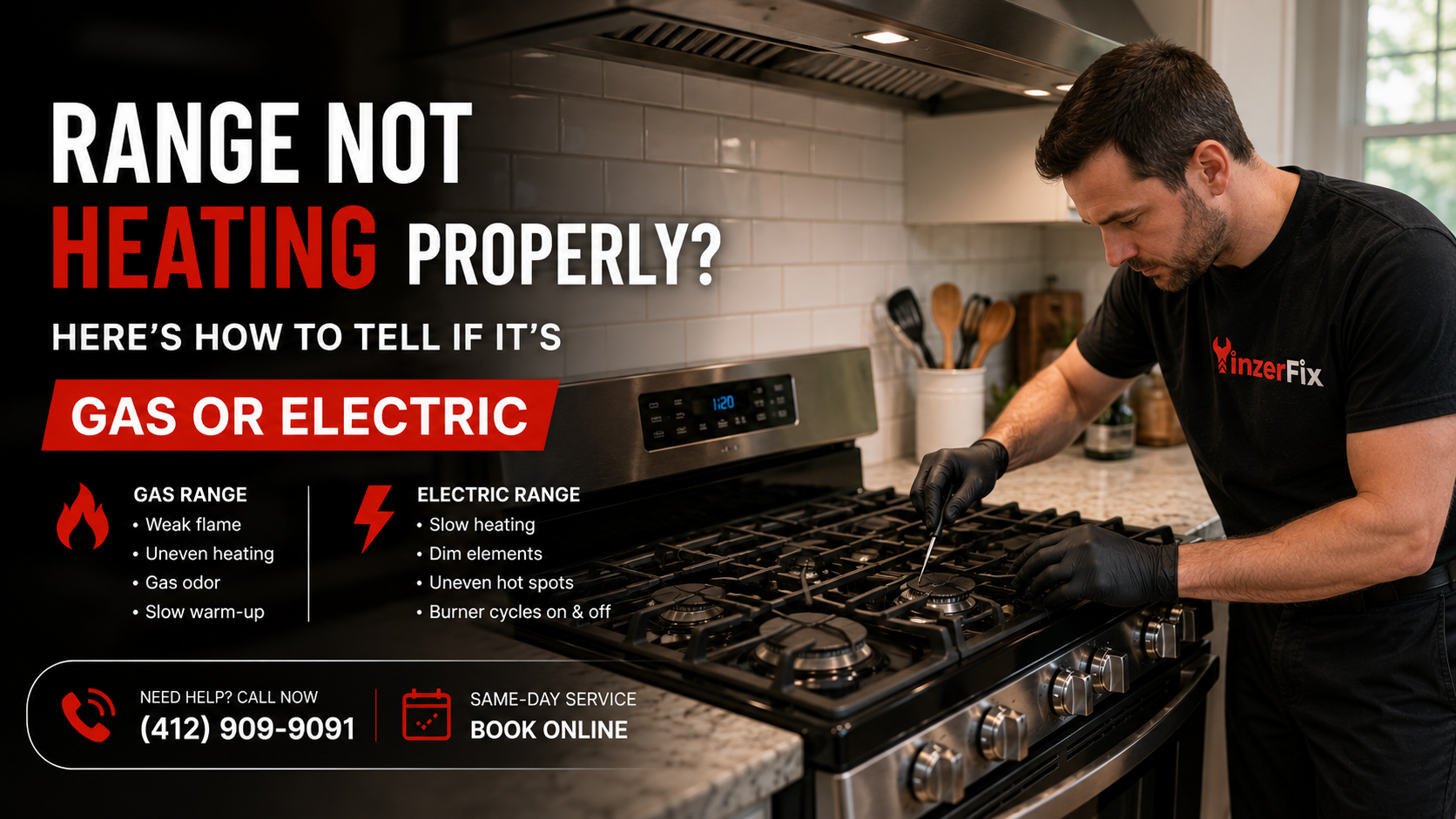
A stove that won't heat the way it used to is one of the most frustrating kitchen problems a homeowner can face. Dinner takes twice as long, simmering turns into scorching, and sometimes one burner works while another barely warms up. Before you can fix the issue, though, it helps to know whether the trouble points to your gas cooking range or your electric unit — because the causes, and the repairs, are very different. Whether you're in Squirrel Hill, Mount Washington, or anywhere else in the city, our team handles residential kitchens across Pittsburgh every single day, so we see these patterns constantly.
Gas vs. Electric: Why the Diagnosis Isn't the Same
A gas cooking range repair usually revolves around the flame — its color, size, and consistency. An electric range repair, on the other hand, is almost always about the heating coil, radiant surface, or the electrical connection feeding it. Knowing which category your problem falls into saves time, narrows down the likely culprit, and helps a technician arrive prepared with the right parts.
Signs Your Gas Range Needs Attention
If you own a gas stove, watch for these warning signs:
A weak, yellow, or flickering flame instead of a strong blue one
Clicking that continues after the burner lights
A faint gas odor near the cooktop
Burners that light unevenly or take several tries
Slow warm-up times when boiling water or searing food
Most of these issues trace back to clogged burner ports, a failing igniter, or a partially blocked gas valve. A little grease buildup around the burner cap can be enough to choke off proper airflow.
Signs Your Electric Range Needs Attention
Electric and radiant cooktops show trouble in different ways:
A coil or surface element that glows dim or unevenly
Food cooking slower than it should at the same setting
A burner that clicks on and off repeatedly
Visible scorch marks, blistering, or damage on the element
One zone heating fine while another stays cold
These symptoms often point to a worn heating element, a faulty infinite switch, or loose wiring at the terminal block behind the range.
Don't Wait Until It Stops Working Completely
Homeowners often keep using a stove that "still sort of works," but a slow-heating range rarely improves on its own. Left alone, minor wear tends to progress into full burner failure, higher electric or gas bills, and inconsistent cooking results that affect every meal. If your range has felt off for more than a week or two, it's worth having it looked at now rather than waiting for a complete breakdown — call (412) 909-9091 or book a visit online and we'll get a technician out fast.
Simple Maintenance That Helps Both Types
A little routine care goes a long way. Clean burner caps and ports on gas stoves monthly to prevent grease clogs. Wipe up spills on electric coils and radiant surfaces before they bake on and damage the element. Check that your range sits level, since an uneven stove can cause uneven heating on both gas and electric models. And never ignore small ignition delays — they're usually the earliest sign of a bigger repair down the road.
When to Call a Professional Range Repair Service in Pittsburgh
Cleaning and basic troubleshooting solve plenty of minor issues, but persistent uneven heat, ignition trouble, or electrical faults call for an experienced eye. A qualified residential range repair technician can safely test gas pressure, inspect wiring, and replace worn components without risking further damage to your appliance. Reliable, code-compliant repairs also protect your home from the safety risks that come with faulty gas connections or exposed electrical parts.
Final Thoughts
Whether your cooktop runs on gas or electricity, uneven or slow heating is a signal worth listening to. Catching the problem early keeps your kitchen running smoothly and avoids a costlier repair later. For dependable, same-day help from a trusted Range Repair Service Pittsburgh homeowners already recommend, our technicians are ready to diagnose the issue and get your stove back to full strength.
Frequently Asked Questions
1. How can I tell if my range problem is gas-related or electrical? Gas ranges usually show flame issues — weak color, uneven lighting, or odor — while electric ranges show dim, slow, or unevenly heating elements.
2. Is a slow-heating stove dangerous? It can be, especially with gas ranges. A weak flame or gas smell should be checked promptly to rule out a leak or ignition fault.
3. Can I fix uneven heating myself? Basic cleaning of burner ports or wiping spills off elements can help, but persistent issues usually need a professional diagnosis.
4. How often should a residential range be serviced? Most homeowners benefit from a checkup once a year, or sooner if you notice slow heating, odd smells, or clicking sounds.
5. Do you repair both gas and electric ranges in Pittsburgh? Yes, our technicians handle gas cooking range repair and electric range repair for homes throughout the greater Pittsburgh area.