
Microwave Sparking or Shutting Off Early? What's Really Wrong
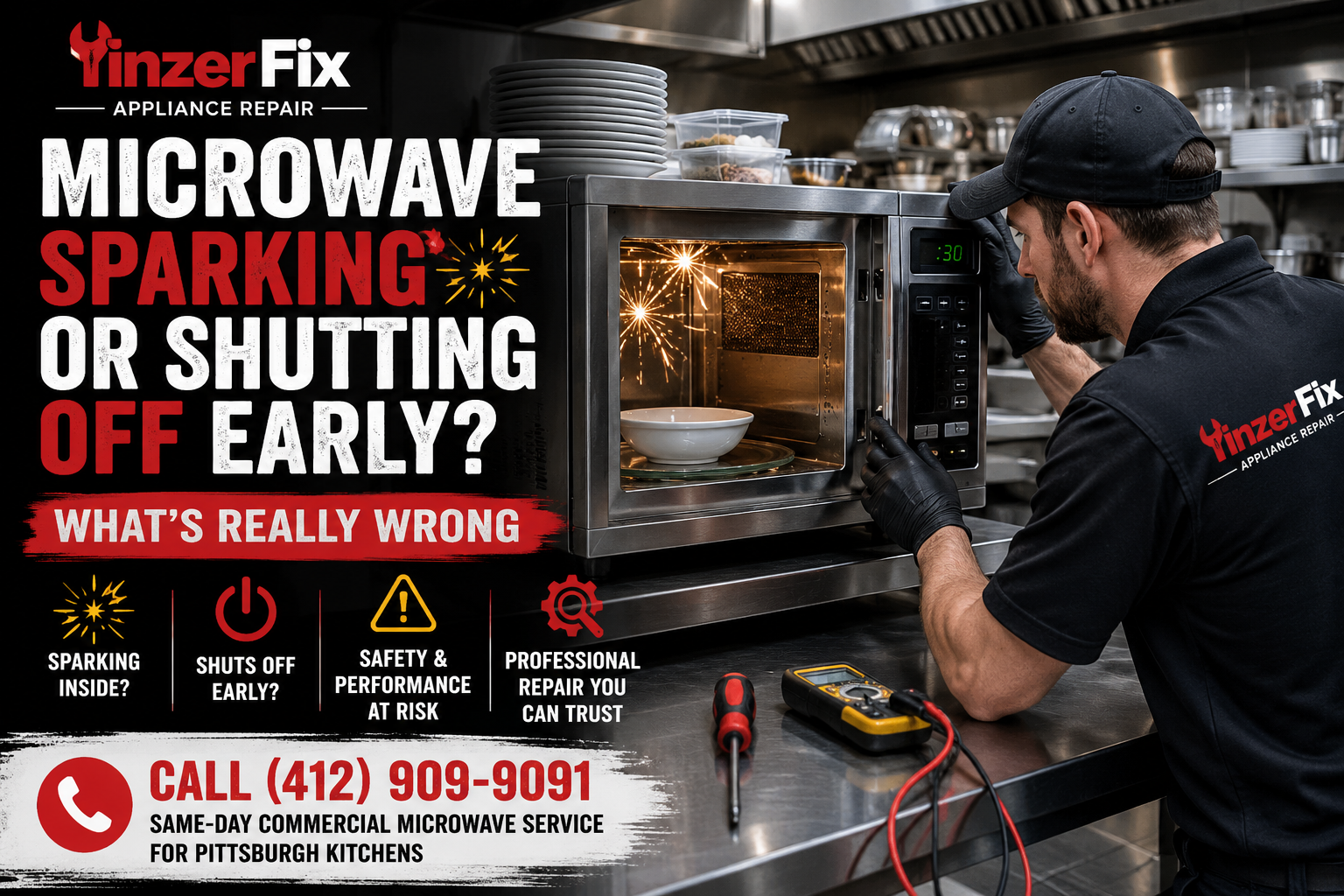
A commercial microwave is one of the hardest-working pieces of equipment in any Pittsburgh kitchen. Cafés use it to reheat soups and sauces between orders, bars rely on it for quick appetizers, and busy restaurant lines depend on it to keep tickets moving during the rush. So when that microwave starts sparking inside the cavity, or shuts itself off halfway through a cycle, it's more than an annoyance — it's a warning sign that shouldn't be ignored. Below, we break down what's actually happening inside the unit and when it's time to bring in a commercial microwave service technician.
Why a Sparking Microwave Is Never "Normal"
Sparking, arcing, or flashing inside a microwave cavity is a sign that something is interfering with the way the unit distributes energy. A little popping from food debris is one thing — but repeated arcing near the walls, vents, or waveguide cover points to a mechanical or electrical problem that will only get worse with continued use. In a commercial setting, running a sparking unit even for one more shift can damage the magnetron and create a safety hazard for staff. If you're seeing this in your kitchen right now, stop using the unit and call (412) 909-9091 for a same-day inspection before it becomes a bigger repair.
Common Causes of Sparking and Arcing
Damaged waveguide cover – grease and food splatter break down this small mica or fiberglass panel over time, exposing metal components to microwave energy
Metal or foil contact – utensils, foil lids, or metallic trim on dishware can trigger visible arcing
Worn or chipped interior paint/enamel – exposed metal underneath reacts with microwave energy
Loose or failing stirrer fan – uneven energy distribution can cause hot spots and sparking
Deteriorating high-voltage diode or capacitor – electrical components that break down internally rather than visibly
Why a Commercial Microwave Shuts Off Early
A unit that stops mid-cycle is usually protecting itself from a bigger failure. The most frequent culprits include:
Overheating protection triggering due to blocked vents or a failing cooling fan
A weakening magnetron that can no longer sustain a full cook cycle
Door switch or interlock issues that cause the control board to cut power as a safety measure
Voltage fluctuations on a shared kitchen circuit, common in older Pittsburgh restaurant buildings
A failing high-voltage transformer, which struggles to maintain consistent output under heavy daily use
Gas, Electric, and Induction Kitchens: Why Microwave Load Matters
Most commercial kitchens don't run microwaves in isolation — they're often plugged in alongside gas ranges, electric flat-tops, or induction cooktops on the same circuit. In kitchens built around gas equipment, microwaves are frequently placed on older, shared electrical lines that weren't designed for today's equipment load, which can cause voltage dips and premature component wear. Electric and induction kitchens draw heavier current overall, and a microwave sharing a circuit with an induction cooktop can experience power surges that stress the transformer and control board over time. Regardless of what type of cooking equipment surrounds it, a commercial microwave needs a dedicated, properly rated outlet to perform reliably — something our technicians check during every service call.
Maintenance Advice That Actually Extends Equipment Life
Routine care makes a measurable difference in how long a commercial microwave lasts between repairs:
Wipe down the cavity and waveguide cover daily to prevent grease buildup
Replace a cracked or discolored waveguide cover immediately rather than waiting
Keep rear and side vents clear of grease trays, boxes, or storage items
Avoid metal trim dishware, foil, and twist ties inside the unit
Schedule a professional inspection every six months for high-volume kitchens
Have electrical outlets checked periodically, especially in older Pittsburgh buildings
Why Pittsburgh Restaurants, Cafés, and Bars Choose Professional Repair
Whether you're running a busy diner in Bloomfield, a coffee shop in Shadyside, or a bar kitchen downtown, downtime on a commercial microwave slows down your entire service line. Attempting a DIY fix on a sparking unit is risky, since high-voltage capacitors can hold a charge even when the microwave is unplugged. A qualified commercial microwave repair technician can safely diagnose whether the issue is the magnetron, transformer, door switch, or wiring, and get your kitchen back to full speed without guesswork.
Signs It's Time to Call a Technician
Visible sparking, arcing, or flashing inside the cavity
The unit shuts off before the cycle finishes
Food is heating unevenly or taking longer than usual
Unusual buzzing, humming, or rattling sounds
A burning smell during operation
Repeated tripped breakers when the microwave runs
If your equipment is showing any of these signs, don't wait for a full breakdown during peak hours. Our team offers a fast, reliable microwave repair service Pittsburgh kitchens have trusted for years, with technicians who understand the demands of restaurants, cafés, bars, and commercial kitchens across the city.
Conclusion
A commercial microwave that sparks or shuts off early is telling you something is wrong internally — whether it's a worn waveguide cover, a failing magnetron, or an electrical supply issue. Ignoring these warning signs risks equipment failure at the worst possible time and puts staff safety at risk. For dependable, professional Commercial Microwave Repair, reach out to YinzerFix Appliance Repair at (412) 909-9091 or book a service appointment online today.
Frequently Asked Questions
1. Is it safe to keep using a microwave that sparks occasionally?
No. Even infrequent sparking can damage internal components further and create a fire or shock hazard. It's best to have it inspected before continued use.
2. Can a bad outlet cause a commercial microwave to shut off?
Yes. Voltage drops from an overloaded or improperly rated circuit can trigger the unit's internal safety cutoff, especially in kitchens with older wiring.
3. How often should a waveguide cover be replaced?
Most commercial waveguide covers should be checked monthly and replaced as soon as they show burns, cracks, or heavy grease buildup — typically every few months in high-volume kitchens.
4. Does sparking always mean the magnetron is failing?
Not always. Sparking can come from a damaged waveguide cover or debris buildup, but if cleaning doesn't resolve it, the magnetron or high-voltage components should be inspected.
5. How quickly can a technician respond in Pittsburgh?
YinzerFix Appliance Repair offers same-day service for most commercial kitchens throughout the Pittsburgh area to minimize downtime during business hours.