
Is It Worth Repairing an Old Microwave, or Should You Replace It?
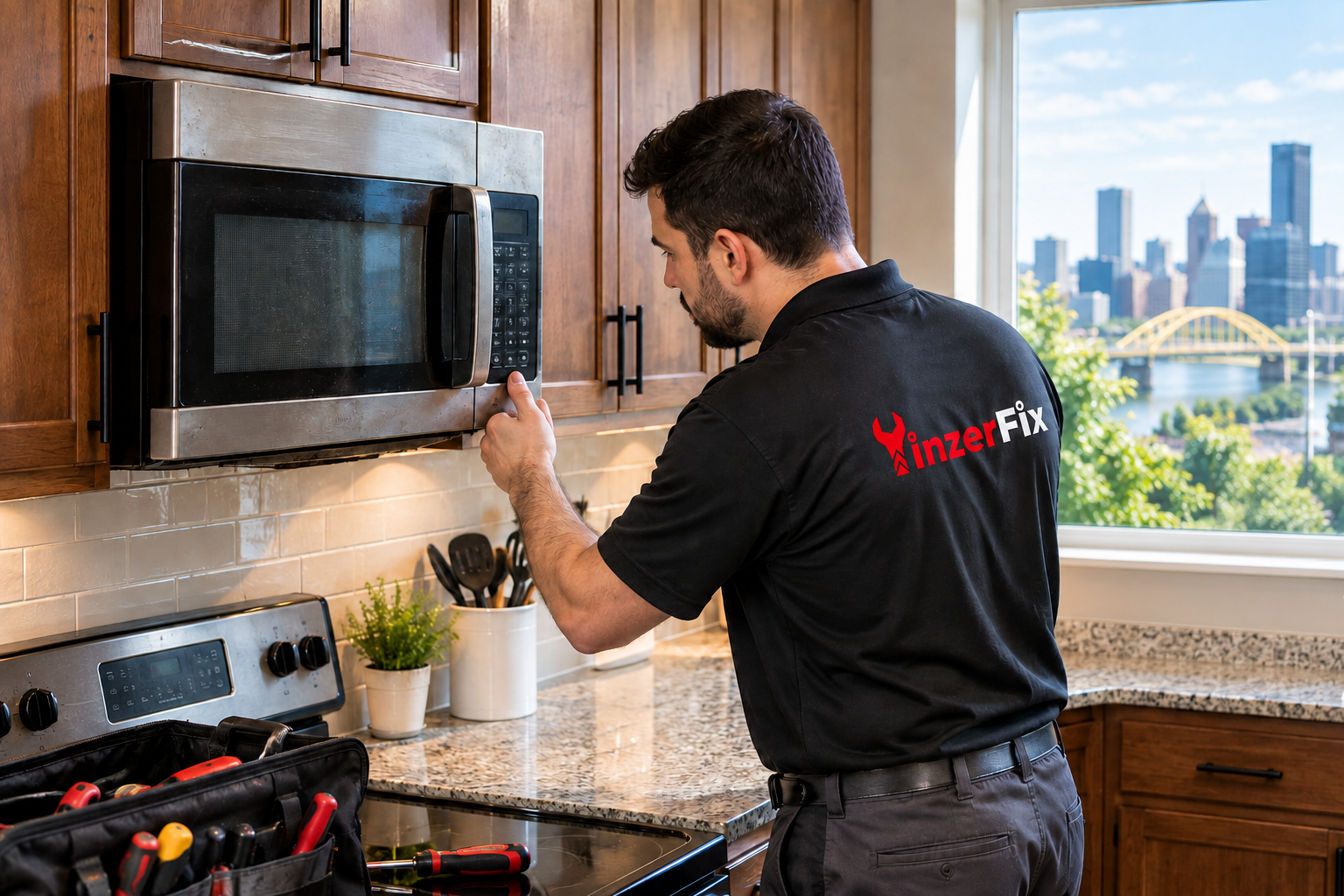
When your microwave stops heating, sparks, or refuses to start, tossing it feels like the easy answer. In many homes, though, professional residential microwave repair costs far less than a new unit, especially for over-the-range and built-in models. Here is how to decide which option makes sense for your kitchen and your budget.
How Old Is Too Old for a Microwave?
Most microwaves last 8 to 10 years with normal use. A unit under 7 years old with a single failed part is usually worth fixing. Past the 10-year mark, parts get harder to source and other components tend to fail soon after, so a quick inspection from a Home Microwave Repair Pittsburgh specialist can show whether your unit is worth keeping.
Common Microwave Problems and Typical Fixes
Knowing the likely culprit helps you estimate the repair cost:
Runs but does not heat: a failed high-voltage diode, capacitor, or magnetron
Will not start or the door will not latch: worn door switches or a broken latch assembly
Sparking or arcing inside: a damaged waveguide cover or burnt interior surface
Dead display or no power: a blown thermal fuse or faulty control board
Turntable will not spin: a bad motor or worn roller coupler
Loud humming or buzzing: a failing transformer or cooling fan motor
The 50 Percent Rule for Microwave Repair vs. Replacement
If the repair quote is more than half the price of a comparable new model, and the unit is over 8 years old, replacement usually wins. Basic countertop models often cost $80 to $200 new, so a major repair rarely pays off. Over-the-range and built-in microwaves are different. They cost several hundred dollars or more, plus installation, venting, and cabinet adjustments, so repair is usually the smarter investment.
Repair It If... Replace It If...
Repair when:
The microwave is under 8 years old
It is an over-the-range or built-in model
The problem is a single, inexpensive part
Replace when:
The unit is over 10 years old with multiple issues
The cavity is rusted or the door frame is warped
The cost approaches half the price of a new unit
Not sure which category yours falls into? Call YinzerFix at (412) 909-9091 or book an appointment online for an honest assessment before you spend a dollar.
Why You Should Never Open a Microwave Yourself
A microwave capacitor can hold a dangerous electrical charge even when the unit is unplugged. Damaged door seals can also allow microwave energy to leak. Leave internal diagnostics to a trained technician with proper testing equipment.
Help for Pittsburgh Homeowners
Whether you live in a classic brick home in Squirrel Hill, a townhouse in Shadyside, or a family house in Mt. Lebanon, our technicians bring common parts on the truck for faster, often same-day fixes. We also service the rest of your kitchen, from refrigerators to dishwashers, so one visit can cover multiple concerns.
Final Thoughts
A good rule of thumb: fix the newer, higher-priced microwave and replace the older, budget one. If you are comparing options for home microwave repair in Pittsburgh, a reliable microwave oven repair service can diagnose the issue and give you an upfront quote. YinzerFix is a trusted name in Pittsburgh appliance repair, and homeowners searching for appliance repair in Pittsburgh can reach us at (412) 909-9091, Monday through Saturday, 7 AM to 9 PM.
Frequently Asked Questions
1. How much does microwave repair usually cost? It depends on the part. Door switches and fuses are typically inexpensive, while magnetrons and control boards cost more.
2. Can a microwave that sparks be repaired? Often yes. Arcing is commonly caused by a damaged waveguide cover or food residue, both fixable. Stop using the unit until it is inspected.
3. Is it safe to use a microwave with a broken door latch? No. A faulty latch or seal can allow energy leakage, so stop using it until it is repaired.
4. How long does a microwave repair take? Most repairs are completed in a single visit when the part is in stock.
Tags :
- residential microwave repair
- microwave repair or replace
- home microwave repair Pittsburgh
- microwave repair
- microwave replacement
- home microwave repair
- microwave
- microwave repair near me
- over-the-range microwave repair
- microwave technician Pittsburgh
- microwave technician
- Pittsburgh
- technician Pittsburgh
- kitchen appliance repair Pittsburgh
- kitchen appliance
- kitchen appliance repair
- appliance repair Pittsburgh
- local appliance repair service
- local appliance repair
- microwave repair or replace cost
- when to replace a microwave oven
- microwave oven