
How to Repair a Clothes Dryer That Won’t Heat
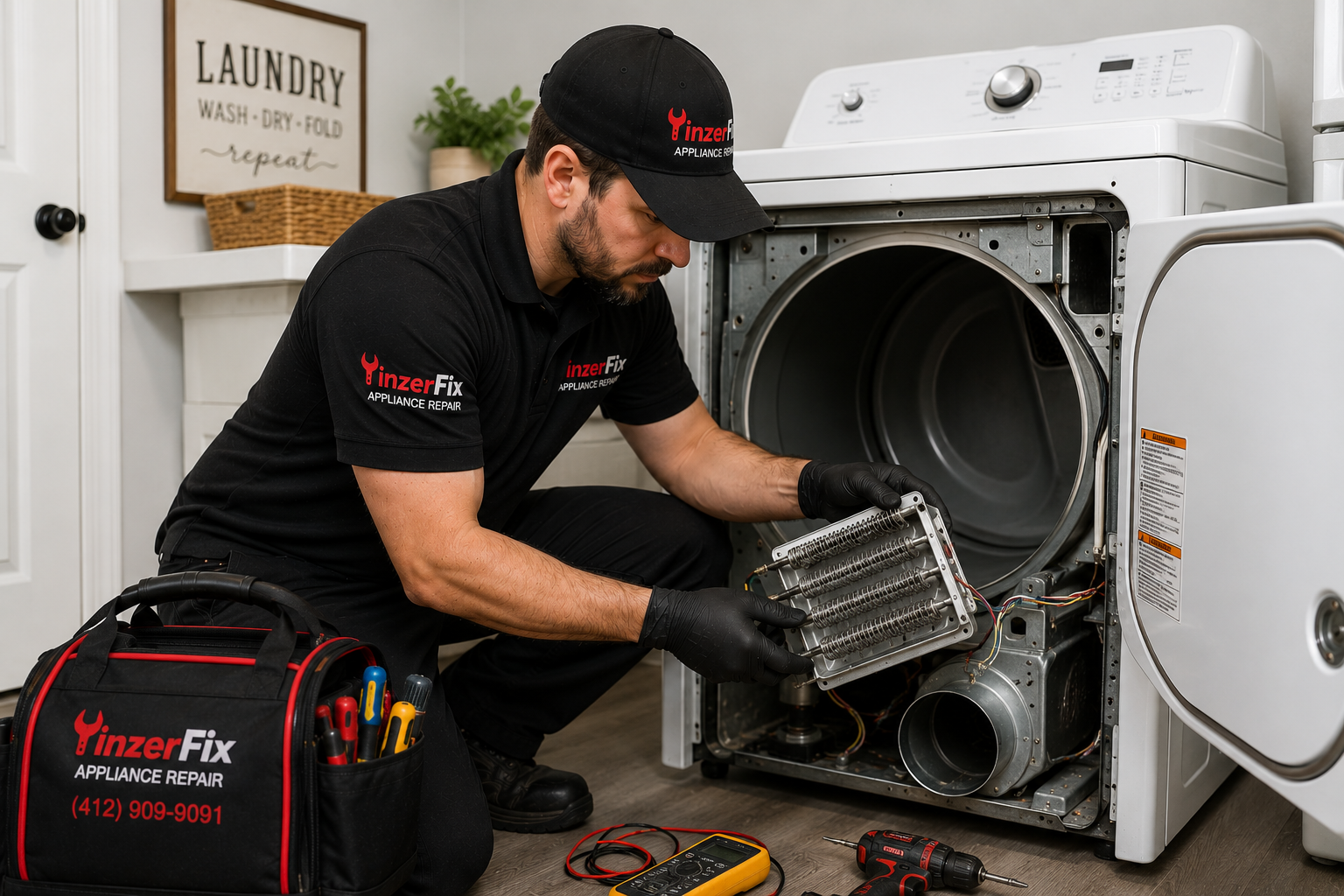
A dryer that runs but doesn’t produce heat can quickly become frustrating for any homeowner. Wet clothes, longer drying times, and repeated cycles often point to a heating problem that should be addressed before it leads to larger appliance damage.
In many cases, common dryer heating problems are caused by restricted airflow, worn components, or electrical issues. Some problems can be solved with basic troubleshooting, while others may require professional repair service.
At YinzerFix Appliance Repair, we provide dependable appliance repair services in Pittsburgh and help homeowners throughout Pittsburgh diagnose dryer heating problems quickly and restore safe, reliable performance.
Common Reasons a Dryer Stops Heating
Dryers rely on several components working together to produce heat properly.
Some of the most common causes include:
Clogged Dryer Vents
Faulty Heating Elements
Blown Thermal Fuses
Thermostat Problems
Electrical Issues
Restricted Airflow
Identifying the issue early can help prevent more expensive repairs later.
Check the Power Supply First
Before assuming a major repair is needed, make sure the dryer is receiving proper power.
Homeowners can:
Check The Power Cord
Inspect The Outlet
Reset Tripped Circuit Breakers
Some dryers may continue running even when one part of the electrical connection fails, which can stop the appliance from heating properly.
Clean the Dryer Vent and Lint Filter
Restricted airflow is one of the most common reasons dryers stop heating efficiently.
Lint buildup inside:
Vents
Filters
Exhaust Ducts
can reduce airflow and create overheating problems.
Quick Maintenance Tips
Clean the lint filter after every load
Inspect dryer vents regularly
Remove lint buildup from exhaust ducts
Make sure outside vents open properly
Improving airflow can sometimes restore normal heating performance.
Inspect the Heating Element
The heating element is responsible for producing heat inside the dryer. If the element burns out, the dryer may continue running without generating heat.
Signs of a faulty heating element may include:
No Heat During Cycles
Unusually Long Drying Times
Weak Heating Performance
Testing and replacing heating elements should be handled carefully to avoid electrical risks.
Check the Thermal Fuse
Dryers use thermal fuses as a safety feature to prevent overheating.
If the fuse blows:
The Dryer May Stop Heating
The Appliance May Shut Off Completely
Thermal fuse problems are often linked to restricted airflow or overheating issues.
Examine the Thermostat
Faulty thermostats can also prevent dryers from heating correctly.
A damaged thermostat may cause:
Inconsistent Heating
Overheating
Repeated Shutdowns
Longer Drying Cycles
If heating problems continue after basic troubleshooting, professional diagnosis may be needed.
When DIY Troubleshooting Isn’t Enough
Some dryer problems require professional repair service. Homeowners searching for common dryer repairs you can do yourself can often handle simple maintenance tasks, but larger electrical or component issues should be left to trained technicians.
You should contact a technician if:
Electrical Issues Continue
Burning Smells Appear
The Dryer Overheats Repeatedly
Major Components Fail
Troubleshooting Does Not Solve The Problem
Professional repair helps reduce safety risks and prevent additional appliance damage.
How to Prevent Future Dryer Heating Problems
Routine maintenance can help reduce future heating issues and improve dryer efficiency.
Maintenance Tips
Clean lint filters regularly
Inspect dryer vents often
Avoid overloading the dryer
Maintain proper airflow
Schedule repairs when small problems appear
Preventative maintenance helps improve appliance lifespan and reduce repair costs. Homeowners looking for affordable dryer repair in Pittsburgh can often avoid larger expenses by addressing small dryer problems early.
Why Pittsburgh Homeowners Choose Professional Dryer Repair
Professional dryer repair helps homeowners:
Diagnose Problems Accurately
Restore Heating Performance Safely
Reduce Recurring Breakdowns
Improve Appliance Efficiency
Extend Dryer Lifespan
Experienced local technicians can also identify hidden issues before they become more expensive repairs.
Schedule Dryer Repair in Pittsburgh
If your dryer is running but not heating properly, YinzerFix Appliance Repair is ready to help. We provide dependable dryer repair services for homeowners throughout Pittsburgh and nearby areas. Our experienced technicians diagnose appliance problems quickly and complete reliable repairs using quality replacement parts.
Whether you need help with heating elements, airflow problems, thermostat issues, or electrical faults, our local Pittsburgh team is here to restore your dryer as quickly as possible. Contact us today to schedule dryer repair service.
FAQs: Home Dryer Repair & Heating Issues
1. Why is my dryer running but not heating?
This is often caused by clogged vents, faulty heating elements, thermostat issues, or blown thermal fuses.
2. Is it safe to repair a dryer heating problem yourself?
Basic maintenance is usually safe, but electrical or major component repairs should be handled by professionals.
3. When should I call a professional for dryer repair in Pittsburgh?
You should consider dryer repair Pittsburgh services if the problem involves electrical components, repeated failures, or complex repairs.
4. How much does it cost to fix a dryer that won’t heat?
Repair costs typically range from $100 to $500 depending on the issue, labor, and replacement parts.
5. Is it safe to repair a clothes dryer yourself?
Basic troubleshooting is safe, but complex repairs should be handled by professionals to avoid safety risks.
6. Can a clogged vent cause a dryer to stop heating?
Yes. Restricted airflow from lint buildup can reduce heating performance and create overheating issues.
7. How long does it take to repair a dryer heating issue?
Most dryer repairs are completed within 1–2 hours, depending on the complexity of the problem.
8. How can I prevent my dryer from not heating again?
Regular maintenance, cleaning lint filters, and ensuring proper airflow can help prevent heating issues and reduce repair frequency.