
How to Organize Your Freezer for Better Efficiency and Cooling
A cluttered freezer can make everyday life more frustrating than most homeowners realize. Food gets buried, airflow becomes restricted, frost buildup increases, and the appliance often has to work harder to maintain proper temperatures.
The good news is that a few simple organization habits can make a noticeable difference. A well-organized freezer helps improve cooling performance, reduce energy use, prevent food waste, and make it easier to find what you need quickly.
At YinzerFix Appliance Repair, we provide dependable appliance repair services in Pittsburgh and help homeowners keep freezers operating efficiently with practical maintenance tips and reliable repair solutions.
Why Freezer Organization Matters
Proper freezer organization is not just about keeping things tidy.
When airflow becomes blocked, the freezer often works harder to maintain cold temperatures. Over time, this can lead to:
Uneven Cooling
Excess Frost Buildup
Higher Energy Bills
Additional Strain On Cooling Components
Good organization helps cold air circulate properly throughout the appliance.
Start by Removing and Sorting Everything
The easiest way to organize a freezer is to completely empty it first.
Group similar items together, such as:
Meats
Vegetables
Frozen Meals
Desserts
Snacks
This makes it easier to see what you have and avoid forgotten food sitting in the back for months.
Use Containers and Baskets
Clear bins and storage baskets help keep items organized and easier to access.
They also help:
Reduce Clutter
Improve Visibility
Prevent Food From Shifting Around
Create Better Airflow Spacing
Stackable containers work especially well for smaller freezers.
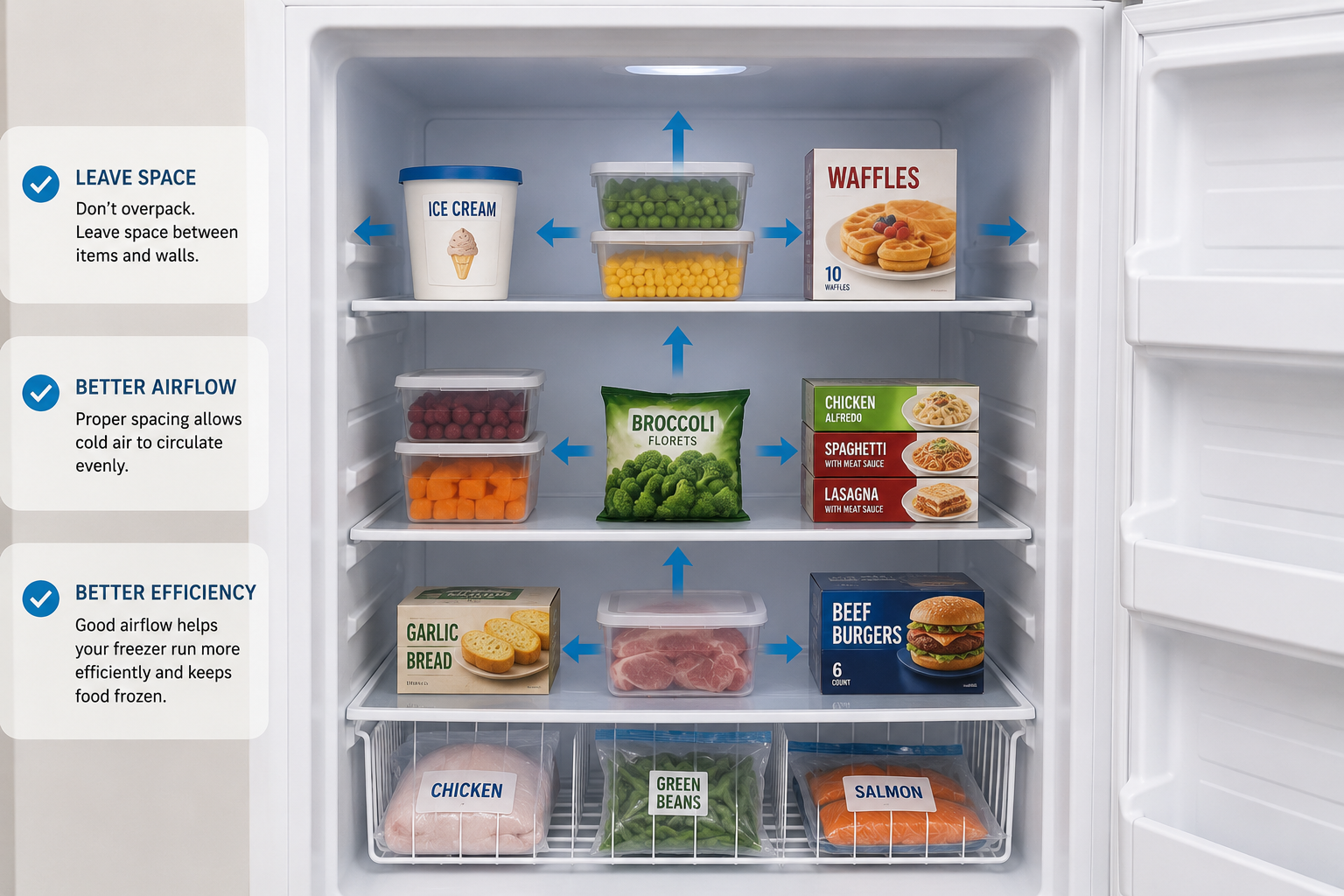
Avoid Overpacking the Freezer
Many homeowners assume a completely packed freezer is more efficient, but overloading can actually block airflow.
When air cannot circulate properly:
Cooling Becomes Uneven
Frost Buildup Increases
The Appliance Works Harder
Leaving small gaps between items helps improve airflow and cooling performance. If your freezer not cooling properly even after reorganizing, there may be an underlying appliance issue that needs professional attention.
Keep Air Vents Clear
Freezer vents allow cold air to circulate throughout the appliance.
Blocking vents with food containers or large frozen items may cause:
Temperature Fluctuations
Weak Cooling
Frost Buildup
Constant Running Cycles
Checking vent placement regularly helps maintain proper airflow.
Label and Rotate Frozen Food
Labeling food with dates makes it easier to:
Avoid Waste
Rotate Older Items Forward
Keep Track Of Inventory
Simple labeling habits can also reduce how often homeowners leave the freezer door open while searching for items.
Organizing Small Freezers More Efficiently
Compact freezers require even more careful organization.
Helpful space-saving ideas include:
Using Stackable Bins
Storing Meats Flat In Freezer Bags
Removing Bulky Packaging
Grouping Similar Foods Together
Good organization helps maximize space without restricting airflow. Homeowners with standalone units can also benefit from additional chest freezer maintenance tips to help improve long-term cooling performance.
Don’t Forget Routine Maintenance
Organization alone cannot solve every freezer problem. Regular maintenance also helps improve performance and efficiency.
Helpful maintenance habits include:
Cleaning Door Seals
Defrosting Excess Ice Buildup
Checking Temperature Settings
Cleaning Condenser Coils
Monitoring Airflow
Preventative care helps reduce strain on internal components and improve appliance lifespan. Problems like freezer leaking water or recurring frost buildup should also be addressed early to prevent larger cooling issues.
Signs Your Freezer May Need Professional Repair
Sometimes cooling problems continue even after improving organization.
You should contact a technician if you notice:
Inconsistent Temperatures
Loud Unusual Noises
Excessive Frost Buildup
Water Leaks
Constant Running Cycles
Recognizing the early signs your freezer needs repair can help homeowners avoid food spoilage and more expensive appliance damage later. In urgent situations, professional same-day freezer repair in Pittsburgh may help restore cooling before a complete breakdown occurs.
A Little Organization Can Make a Big Difference
Small organization habits can improve:
Cooling Performance
Energy Efficiency
Food Storage
Appliance Lifespan
Keeping the freezer organized also makes everyday use much easier for busy households.
Why Pittsburgh Homeowners Choose Professional Freezer Repair
Professional appliance repair helps homeowners:
Diagnose Cooling Problems Accurately
Improve Freezer Efficiency
Reduce Recurring Appliance Issues
Extend Appliance Lifespan
Avoid Unnecessary Replacement Costs
Our experienced local technicians provide dependable freezer repair services throughout Pittsburgh and nearby areas.
Schedule Freezer Repair in Pittsburgh
If your freezer is not cooling properly, developing frost buildup, or running constantly, YinzerFix Appliance Repair is ready to help.
We provide reliable freezer repair services for homeowners throughout Pittsburgh and surrounding areas. Our experienced technicians diagnose appliance problems quickly and complete dependable repairs using quality replacement parts.
Whether you need help with cooling failures, airflow concerns, frost buildup, or maintenance issues, our local Pittsburgh team is here to help you schedule freezer repair service and restore your appliance as quickly as possible.
Frequently Asked Questions
1. How to organize your freezer for better efficiency?
To improve efficiency, group similar items together, use labeled containers, avoid overpacking, and keep airflow vents clear so cold air circulates properly.
2. What is the best way to organize a small freezer ?
Using stackable bins, labeled containers, and grouping similar foods together helps maximize space efficiently.
3. How does freezer organization improve cooling?
Proper organization allows better airflow, which helps maintain consistent temperatures and reduces strain on the appliance, improving overall cooling performance.
4. What are some easy freezer organization tips?
Use clear bins, label items with dates, rotate older food to the front, and avoid blocking vents to keep your freezer efficient and clutter-free.
5. Can overloading a freezer cause cooling problems?
Yes. Overpacking can block airflow and lead to uneven cooling or frost buildup.
6. How to arrange a freezer for better cooling in small spaces?
Use stackable containers, store items vertically, and keep frequently used foods accessible while ensuring vents remain unobstructed for proper airflow.
7. When should I call a professional for freezer issues?
If your freezer isn’t cooling properly, makes unusual noises, or shows performance issues despite proper organization, it’s best to contact a repair expert for diagnosis.