
How to Organize a Commercial Refrigerated Sandwich Prep Table to Maintain Food Quality During Service
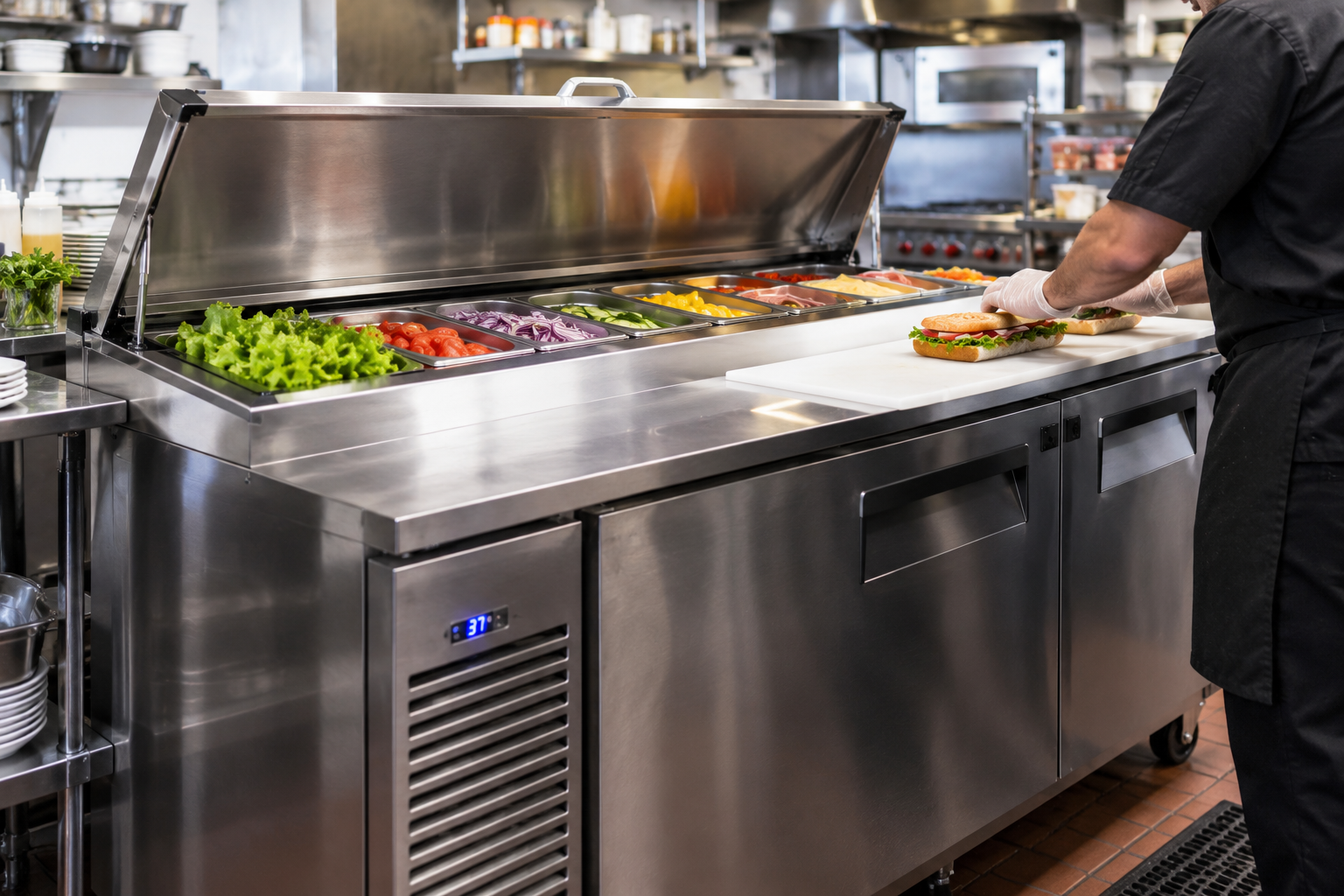
A commercial refrigerated sandwich prep table is one of the hardest-working pieces of equipment in any restaurant, deli, or café kitchen. It holds cold ingredients within reach of line cooks while keeping them at safe temperatures through hours of lids opening, pans shifting, and rush-hour pressure. When it's organized well, service moves faster and food stays fresher. When it isn't — or when the unit itself starts struggling to hold temperature — food quality and safety are both on the line.
Why Prep Table Organization Affects Food Quality
Every time a pan is pulled out or a lid stays open too long, warm kitchen air enters the cold well. A well-organized station limits how often that happens and how long it lasts. Ingredients used most often (lettuce, tomatoes, deli meats, cheese) should sit closest to the front, while slower-moving items stay toward the back or in the lower refrigerated cabinet. Grouping ingredients by dish or station — sandwiches on one side, salads on the other — also cuts down on unnecessary lid time.
Practical Tips for Organizing Your Prep Station
Keep pans filled to the recommended level; partially empty pans allow warm air to circulate faster.
Use tight-fitting lids and only remove them when actively prepping food.
Store backup ingredients in a separate reach-in cooler rather than overloading the rail.
Rotate stock using first-in, first-out (FIFO) labeling to avoid spoilage.
Leave space around vents inside the cabinet so cold air can circulate properly.
Check that the cutting board area isn't blocking airflow from the rail into the pans.
Common Equipment Issues That Undo Good Organization
Even a perfectly organized station can't compensate for a refrigerated prep table that isn't cooling correctly. A few issues we see often in Pittsburgh kitchens include:
Dirty or blocked condenser coils — dust and grease buildup makes the compressor work harder and cool less efficiently.
Worn door or lid gaskets — gaps let warm air seep in continuously, even when the unit is "closed."
Overloaded top rail pans — stacking ingredients above the fill line blocks the cold air curtain.
Failing thermostats or fan motors — these cause inconsistent temperatures across the pan area, cold in one corner and too warm in another.
Clogged drain lines — trapped condensation can freeze coils or promote bacterial growth.
If your station is well-organized but still won't hold temperature, the problem is usually mechanical rather than a workflow issue — and that's where professional commercial prep table repaircomes in rather than more rearranging.
Not sure if it's an organization issue or an equipment issue? Our technicians can usually tell over the phone. Call (412) 909-9091 or book a visit online and we'll take a look before your next rush.
Signs Your Prep Table Needs Professional Attention
Ingredients feel warm to the touch within the danger zone
Condensation building up inside the cabinet or on pans
The compressor running constantly without cycling off
Uneven cooling — one end cold, the other lukewarm
Ice forming near the evaporator fan
Unusual noise or vibration from the compressor area
Who We Help Across Pittsburgh
Restaurants, cafés, bars, delis, and busy commercial kitchens across the Pittsburgh area rely on their prep tables for consistent, fast service every day. Whether it's a single sandwich station in a small café or a multi-well pizza and salad setup in a full-service restaurant kitchen, keeping that equipment reliable is part of keeping the whole operation running smoothly.
When to Call for Commercial Prep Table Repair
Routine cleaning and smart organization go a long way, but compressor, gasket, and airflow problems need a trained technician. YinzerFix Appliance Repair provides Commercial Refrigerated Prep Table Repair for restaurants, cafés, and commercial kitchens throughout Pittsburgh, working on sandwich, salad, and pizza prep units from major brands. We also support the rest of your kitchen's cold-storage needs through our broader commercial refrigeration services, so one call can cover your whole line if needed.
Conclusion
A well-organized commercial refrigerated sandwich prep table keeps ingredients fresh, speeds up service, and helps your kitchen stay compliant with food safety standards. But no amount of organizing can fix a unit with a failing compressor or worn gaskets. If your prep table is struggling to hold temperature, don't wait for a health inspection to find out — contact YinzerFix Appliance Repair at (412) 909-9091 or schedule service online for dependable prep table repair across Pittsburgh.
Frequently Asked Questions
1. How cold should a commercial refrigerated sandwich prep table stay?
The cold well and pans should generally stay at or below 40°F to keep ingredients within safe holding temperatures.
2. Can overloading the pans cause cooling problems?
Yes. Overfilled or stacked pans can block the airflow curtain that keeps the rail cold, leading to uneven temperatures.
3. How often should the condenser coils be cleaned?
Most restaurant kitchens should clean condenser coils monthly, or more often in greasy or high-traffic environments.
4. Is organization enough to fix a warm prep table?
Not usually. If temperatures stay high after reorganizing and cleaning, the issue is likely mechanical and needs a technician.
5. What brands do you service for prep table repair?
We repair most major commercial refrigeration brands, including True, Turbo Air, Delfield, Beverage-Air, and Hoshizaki.
Tags :
- commercial refrigerated sandwich prep table
- refrigerated prep table repair
- commercial prep table repair
- sandwich prep table organization
- pizza prep table repair Pittsburgh
- how to organize a commercial prep table for food safety
- best way to set up a sandwich prep station in a restaurant
- how to keep ingredients fresh in a prep table during service
- commercial prep table setup tips for restaurants
- how to arrange pans in a refrigerated prep table
- how to prevent food spoilage in a prep table
- why is my commercial prep table not staying cold
- signs your refrigerated prep table isn't cooling properly
- how cold should a sandwich prep table be
- commercial prep table running warm during service
- why does my prep table cool unevenly
- how to fix a prep table that won't hold temperature
- commercial refrigeration warm spots troubleshooting
- when to call a technician for a prep table repair
- commercial prep table repair near me Pittsburgh
- how often should a prep table be professionally serviced
- common problems with restaurant sandwich prep tables
- pizza prep table repair for restaurants Pittsburgh