
How to Check Your Kitchen Opening Before a New Range Installation
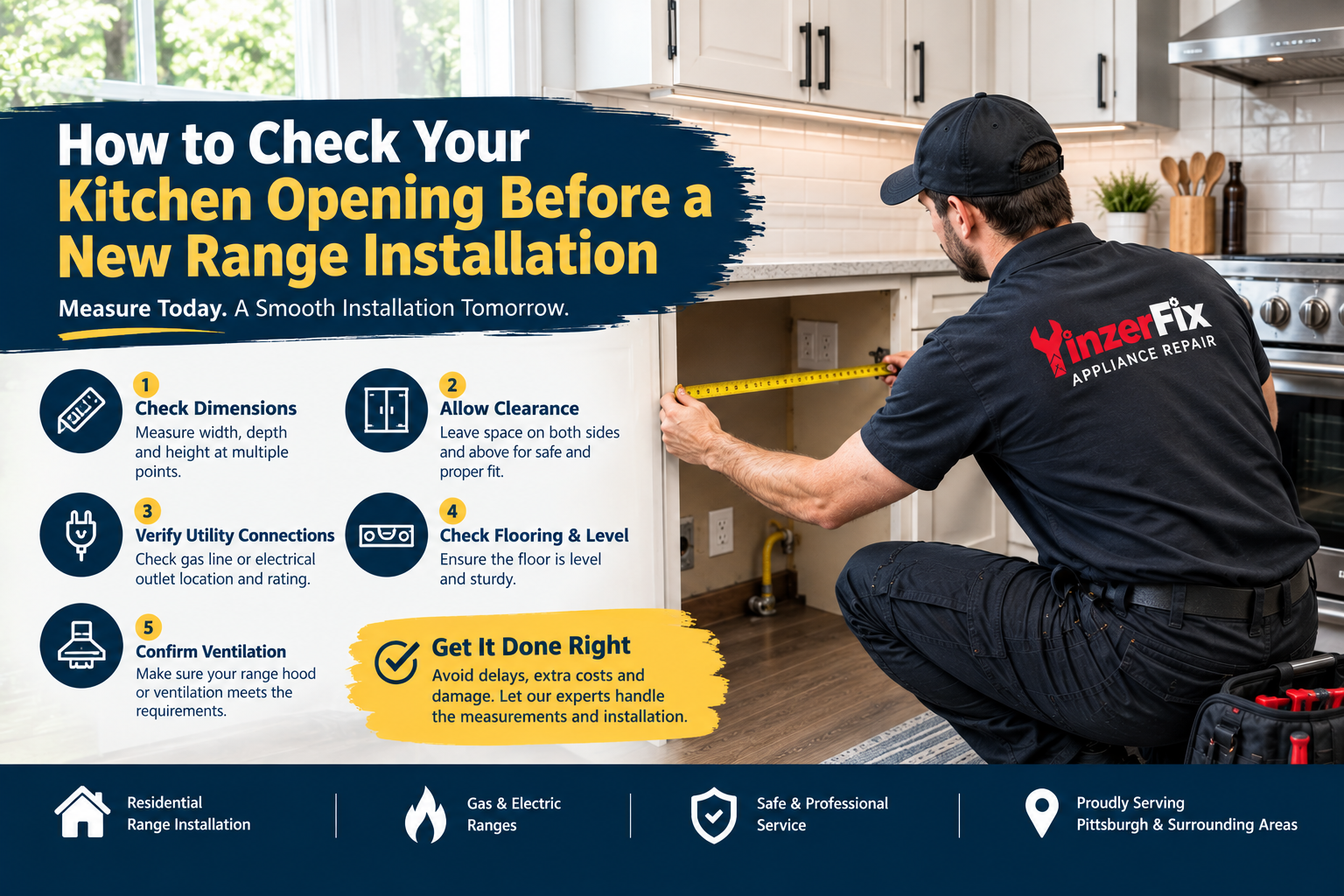
Buying a new stove is exciting, but before the delivery truck shows up, your kitchen needs to be ready for it. One of the most common reasons a residential range installation gets delayed or damaged on delivery day is a kitchen opening that was never properly measured. Whether you're upgrading to a sleek electric model or replacing an old unit with a new gas range, taking ten minutes to check your space can save you a return trip, a restocking fee, and a scratched countertop.
If you'd rather skip the guesswork entirely, our team at YinzerFix handles measurements, hookups, and haul-away as part of every installation. Call (412) 909-9091 or book your installation online before your new appliance arrives.
Why Measuring Your Kitchen Opening Matters
Every range, whether it's a freestanding electric unit or a gas stove, is built to fit within a standard cutout, but "standard" varies by brand, fuel type, and finish. Homes across Pittsburgh, especially older rowhouses and pre-war kitchens, often have cabinet openings that were customized decades ago and never resized for modern appliances. Skipping this check is one of the most common causes of a delayed or failed installation.
What to Measure Before Installing a Gas Range Stove or Electric Model
1. Width, Depth, and Height of the Opening
Measure the cabinet cutout at three points, side to side, front to back, and floor to countertop, since older cabinetry is rarely perfectly square. Compare these numbers to your new appliance's spec sheet, not just the "standard 30-inch" assumption.
2. Clearance on Both Sides and Above
Leave enough clearance between the range and adjacent cabinets or walls to allow the doors to open fully and to meet manufacturer fire-safety clearances near upper cabinets or a range hood.
3. Utility Connection Location
For an electric range installation, confirm the outlet is rated for the appliance's amperage (most ranges need a dedicated 240-volt circuit) and sits within reach of the appliance's cord. For a gas range, check that the shutoff valve and flexible connector line up with the back of the unit, not buried behind it.
4. Flooring and Leveling
Uneven flooring is common in older Pittsburgh homes. Check that the floor beneath the opening is level, since an unlevel range can affect burner performance and oven baking accuracy.
5. Ventilation Requirements
Gas ranges in particular need adequate airflow. Confirm your range hood or ventilation system is sized correctly for the new unit's BTU output.
Common Issues Homeowners Run Into
Cabinet openings too narrow for slide-in or professional-style ranges
Electrical outlets rated for the old appliance but not the new one
Gas lines positioned off-center from the new connector
Insufficient clearance from upper cabinets, creating a fire-code concern
Flooring that isn't level, causing the appliance to rock
When to Call a Professional
If your measurements don't line up, or you're not sure whether your current gas line or electrical setup can safely support a new appliance, it's worth having a technician confirm before delivery day. This is especially true when installing a gas range stove, since improper hookups can create a genuine safety hazard rather than just an inconvenience.
Let YinzerFix Handle Your Range Installation
From measuring the opening to connecting gas or electric lines safely, our residential installation team takes the stress out of appliance day. Contact YinzerFix at (412) 909-9091 or schedule your residential range installation today and get it done right the first time.
Frequently Asked Questions
1. What is the standard opening size for a residential range?
Most freestanding ranges fit a 30-inch-wide opening, but professional-style and slide-in models can require more width and depth. Always check your model's spec sheet.
2. Do I need a licensed technician to install a gas range?
Yes. Gas connections should be handled by a qualified technician to ensure a safe, leak-free installation.
3. Can an electric range use the same outlet as my old one?
Only if the outlet's voltage and amperage match the new appliance's requirements. Older homes sometimes need an electrical upgrade first.
4. What happens if my kitchen opening is too small?
Cabinetry may need to be adjusted, or you may need a different range size. A technician can advise on the best solution.
5. How long does a typical range installation take?
Most installations take one to two hours once the opening and utility connections are confirmed to be ready.
Tags :
- Residential Range Installation
- Electric Range Installation
- Installing a Gas Range Stove
- Range Installation Cost
- New Stove Installation Requirements
- Kitchen Cabinet Opening for Range
- how to measure kitchen opening for a new range
- what size opening do I need for a gas range
- electric range installation requirements at home
- clearance needed for range hood installation
- how to install a gas range stove safely at home
- checking outlet voltage for electric range installation