
How Lint Buildup Affects Commercial Dryer Performance and Safety
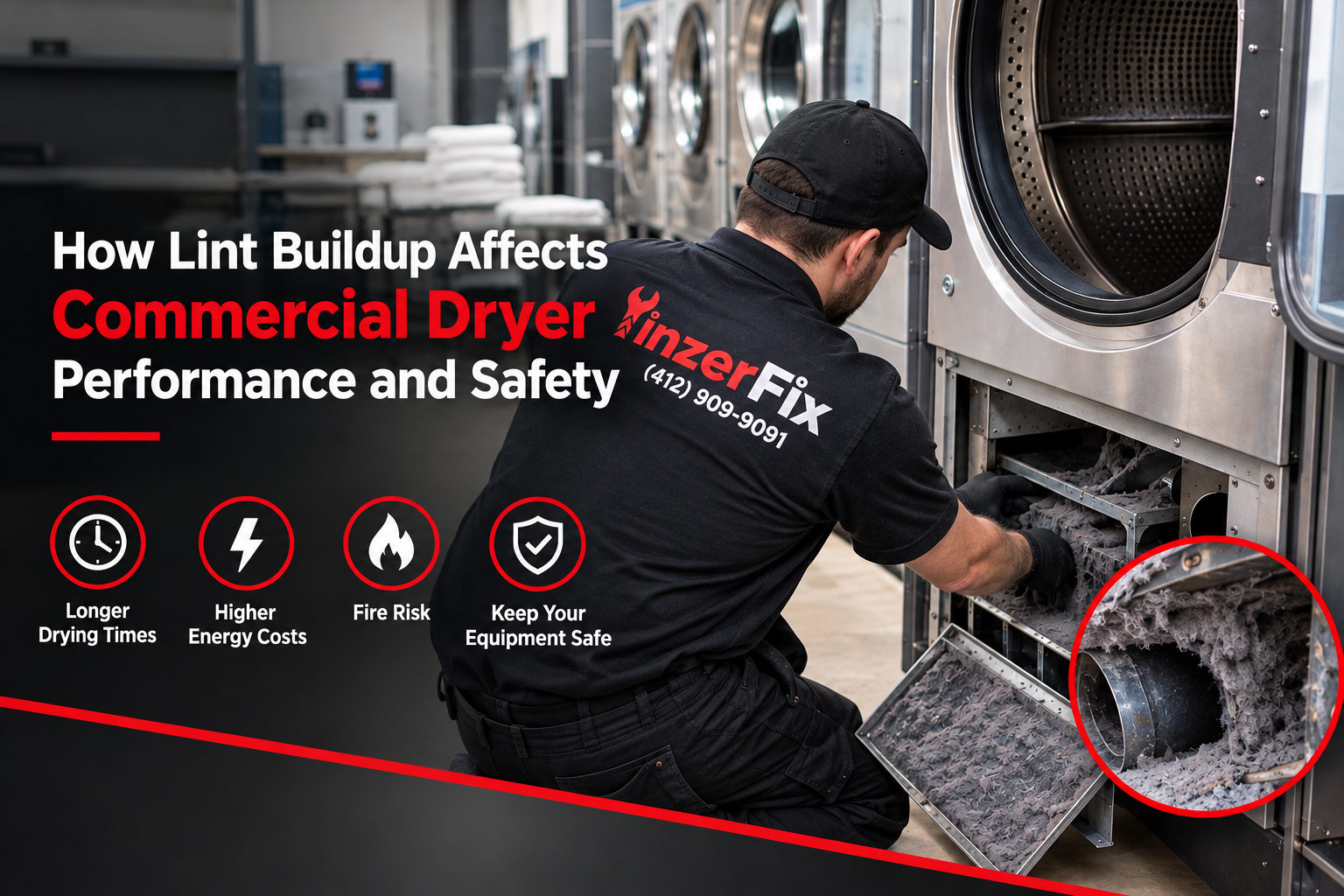
For laundromats, hotels, gyms, salons, and restaurants across Pittsburgh, a commercial dryer is one of the hardest-working machines on-site, and it's also one of the most common reasons businesses end up calling a commercial dryer repair service . Every load pushes fabric fibers, dust, and debris through the drum and venting system, and over time that lint has to go somewhere. When it isn't cleared regularly, it collects in places that quietly reduce airflow, strain the heating system, and create real safety hazards. Understanding how this buildup happens is the first step toward avoiding costly downtime and protecting your equipment investment.
How Lint Buildup Develops Inside a Commercial Dryer
Lint doesn't only collect in the trap. It also accumulates inside the drum seals, the blower housing, the heating element or gas burner assembly, and the full length of the exhaust duct. Gas dryers can be especially sensitive, since restricted airflow around the burner can affect combustion efficiency and heat output. Electric units, on the other hand, often show buildup around the heating coil, which can cause the element to cycle on and off more than it should. In high-volume settings like hotels or commercial kitchens running towels and linens daily, this buildup can form far faster than a manufacturer's standard maintenance schedule assumes.
Warning Signs Your Dryer Needs Attention
Business owners often notice a change in performance before they notice the lint itself. Common indicators include:
Clothes or linens coming out damp after a full cycle
Noticeably longer drying times than usual
The dryer or exterior cabinet feeling hotter than normal to the touch
A burning or musty smell during operation
Excess lint collecting around the door seal or vent hood
Higher gas or electric utility bills without a change in usage
The unit shutting off mid-cycle due to overheating protection
If your team is running a busy shift and the dryer suddenly can't keep up, it's worth pausing to check the vent and lint screen before pushing through more loads — continued use with restricted airflow is one of the fastest ways to damage a heating element or burner assembly.
The Safety Risk Behind the Performance Problem
Beyond slower drying, trapped lint is highly combustible and one of the leading causes of dryer-related fires in commercial settings. Restricted exhaust airflow forces the unit to run hotter for longer, which increases wear on internal components and raises fire risk in spaces where dryers run back-to-back throughout the day. For businesses serving customers on-site, like laundromats and salons, this isn't just an equipment issue — it's a liability concern.
If you're noticing any of these signs right now, don't wait for a shift to end. Call YinzerFix Appliance Repair at (412) 909-9091 or book a service visit online — our technicians can often diagnose airflow and heating issues same day.
Maintenance Habits That Reduce Buildup
Clean the lint trap after every single load, not just once a day
Inspect and clear the exhaust vent every one to three months depending on volume
Schedule a professional duct and blower inspection at least twice a year
Keep the area around the dryer clear of stored linens or supplies that can trap lint dust
Watch cycle times weekly — a gradual increase is often the earliest warning sign
When to Call a Professional
Routine cleaning handles surface-level lint, but buildup inside the blower, burner, or heating assembly requires hands-on diagnostic work. A qualified commercial dryer repair technician can inspect airflow, test heating output, and confirm the vent system is exhausting properly — catching problems before they lead to a breakdown during business hours. Pittsburgh restaurants, cafés, bars, and hotels that keep laundry running daily benefit most from a consistent inspection schedule paired with prompt repairs when issues appear.
Conclusion
Lint buildup may seem like a minor housekeeping issue, but left unaddressed, it slows production, drives up utility costs, and puts your business at real fire risk. Routine cleaning helps, but a full inspection from an experienced technician is the best way to confirm your equipment is running safely. YinzerFix Appliance Repair provides dryer repair throughout Pittsburgh throughout Pittsburgh for restaurants, laundromats, hotels, and commercial kitchens — contact our team or call (412) 909-9091 to schedule an inspection before lint buildup turns into a bigger problem.
Frequently Asked Questions
1. How often should a commercial dryer vent be cleaned?
Most high-volume businesses should have the vent and duct system inspected every one to three months, depending on daily load count.
2. Can lint buildup really cause a dryer fire?
Yes. Lint is highly flammable, and restricted airflow forces the dryer to run hotter, significantly increasing fire risk over time.
3. Does lint buildup affect gas dryers and electric dryers differently?
Both are affected, but gas dryers may show reduced burner efficiency, while electric dryers often show a heating element that cycles more frequently.
4. What's the first sign my commercial dryer has an airflow problem?
Longer drying times are usually the earliest and most noticeable sign, followed by excess heat around the cabinet.
5. Should I keep using the dryer if it's overheating?
No. Continued use while overheating can damage internal components and increases fire risk — it's best to shut it down and call a technician.
Tags :
- commercial dryer repair
- dryer repair Pittsburgh
- Pittsburgh appliance repair
- commercial dryer maintenance
- industrial dryer repair
- commercial laundry equipment repair
- dryer vent cleaning service
- gas dryer repair Pittsburgh
- electric dryer repair Pittsburgh
- dryer overheating repair
- commercial dryer not drying clothes
- dryer fire hazard prevention
- laundromat dryer repair Pittsburgh
- restaurant appliance repair Pittsburgh
- hotel laundry equipment repair
- Appliance Repair Pittsburgh
- yinzer fix appliance repair
- Pittsburgh Appliance Repair