
Gas Range Burner Won't Ignite? Start With These Simple Checks
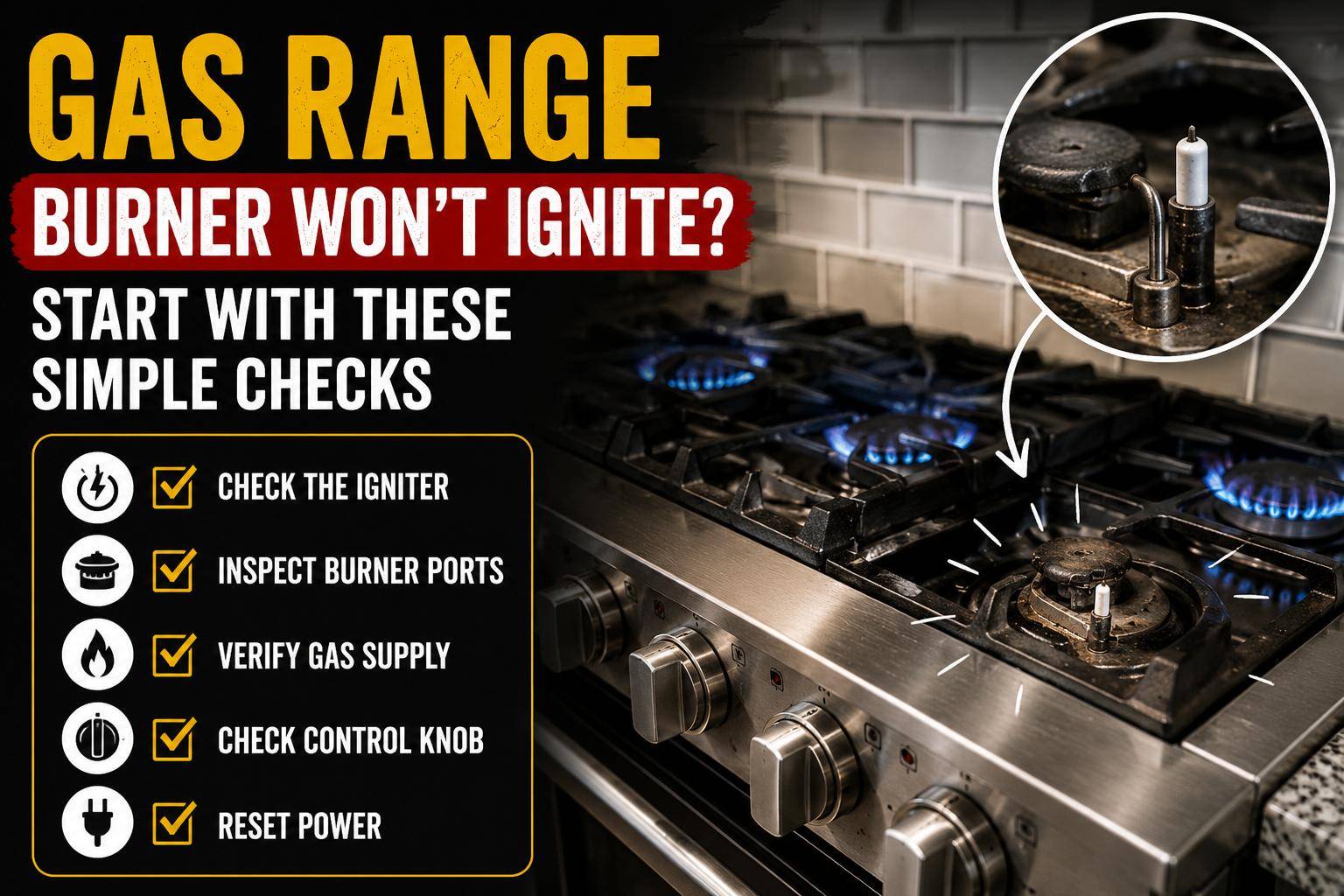
A gas range burner that won't ignite is one of the most common calls we get, whether it's a home kitchen in Squirrel Hill or a busy diner on the South Side. One minute the stove is working fine, and the next, you're hearing a click but getting no flame — or nothing at all. Before you assume the worst, a few simple checks can often point you straight to the problem.
Why a Gas Stove Burner Won't Light
Several everyday issues can keep a burner from igniting properly:
Clogged burner ports – Food debris, grease, or spilled liquid can block the small holes gas flows through.
Moisture around the igniter – Recently cleaned burners that weren't fully dried can short out the spark.
A misaligned burner cap – If the cap sits even slightly off-center, gas can't reach the igniter correctly.
A worn or dirty spark electrode – This part creates the clicking sound and spark; buildup here weakens ignition.
Gas supply interruptions – A closed valve, low gas pressure, or supply line issue will stop ignition entirely.
Electrical or control board faults – On newer ranges, a faulty switch or module can prevent the igniter from firing.
Quick Checks Before Calling a Technician
Make sure the burner cap and grate are seated properly and haven't shifted out of place.
Wipe down the burner head and ports with a dry cloth to clear grease or moisture.
Listen for the clicking sound — if it's absent, the igniter itself may be failing.
Check that other burners on the range ignite normally; this helps isolate whether the issue is with one burner or the gas supply.
Confirm the gas supply valve behind the range is fully open.
If you've gone through these steps and the burner still won't catch, it's usually a sign of a deeper mechanical or electrical issue rather than something you can safely troubleshoot further on your own.
Don't let a stalled burner slow down your kitchen. Give our team a call at (412) 909-9091 or book a service visit online and we'll have a technician out to diagnose it quickly.
When Professional Gas Range Repair Makes Sense
If cleaning and basic checks don't restore the flame, a stubborn ignition issue is often tied to a failing igniter, a faulty control board, or a gas supply problem that needs a trained eye. Continuing to use a lighter or match to manually ignite a burner isn't a long-term fix, and it can mask a bigger safety concern. Our technicians regularly handle residential range and cooktop repairs across Pittsburgh, from single-burner ignition trouble to full stove diagnostics, and we carry parts for most major brands to get your kitchen back up and running the same day when possible.
Conclusion
An ignition problem doesn't always mean your range is on its way out — often it's a quick fix once the actual cause is identified. But when basic troubleshooting doesn't solve it, waiting can turn a small repair into a bigger one. If your burner still won't light, reach out to YinzerFix Appliance Repair for a fast, reliable diagnosis.
Frequently Asked Questions
1. Why does my gas burner click but not light? This usually points to a weak or dirty igniter, moisture around the burner, or a blocked port preventing gas flow.
2. Is it safe to keep lighting a burner manually? It's not recommended. Manual lighting can hide an underlying gas or electrical issue that should be repaired.
3. Can a dirty burner cap really stop ignition? Yes. Even a slightly misaligned or greasy cap can prevent the spark from reaching the gas properly.
4. How long does gas range ignition repair usually take? Most ignition repairs are completed same-day once the part is identified and available.