
Fridge Too Big for the Space? What to Know Before Installation
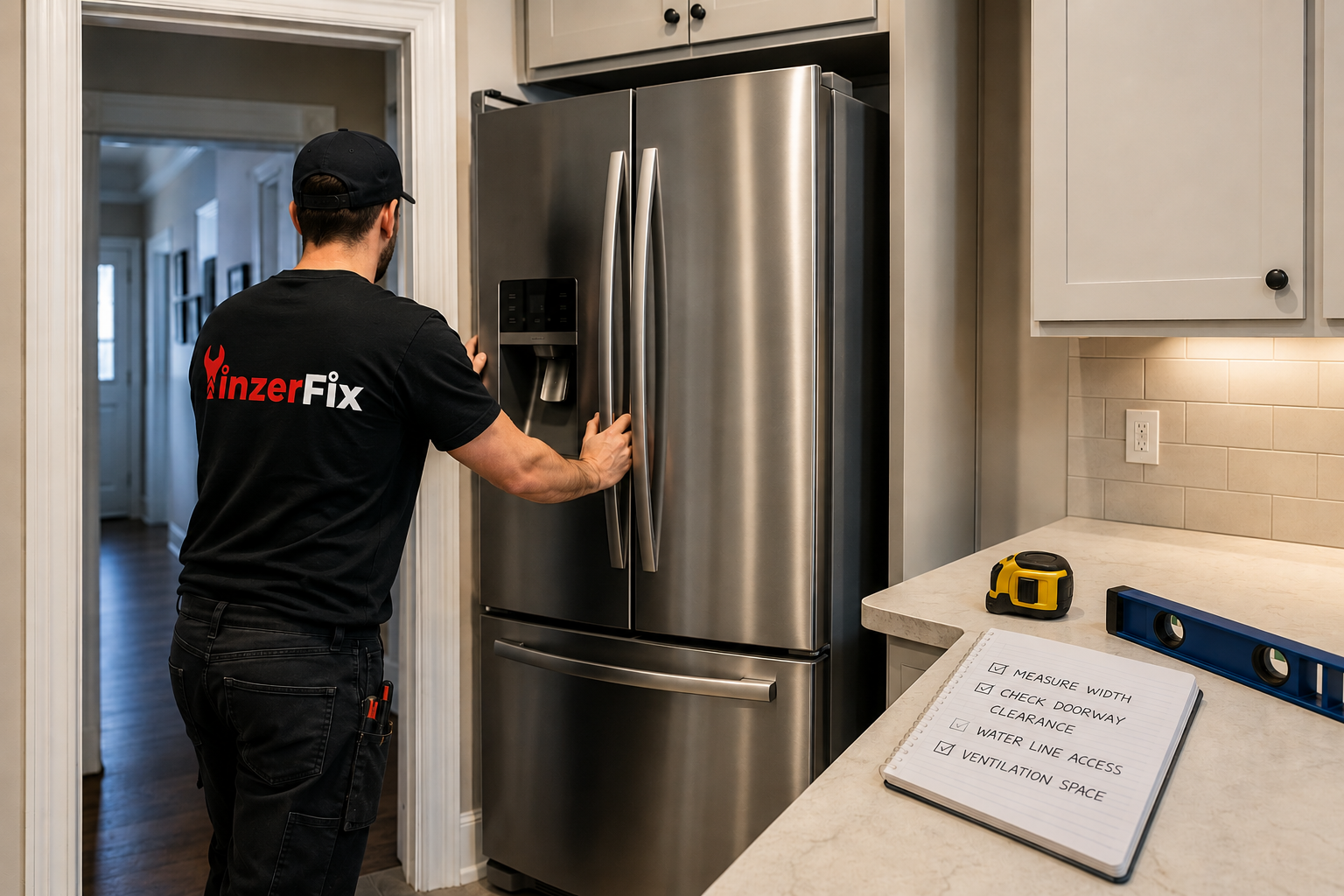
Buying a new refrigerator is exciting, until it shows up and doesn't quite fit where you planned. A tight kitchen nook, a narrow hallway, or a doorway that's an inch too small can turn a simple appliance swap into a stressful afternoon. Before you schedule delivery, here's what Pittsburgh homeowners should know to avoid a sizing headache and get a smooth residential refrigerator installation from day one.
Why Refrigerator Sizing Problems Happen So Often
Kitchens built decades ago, especially in many of Pittsburgh's older homes, weren't designed around today's larger French door and counter-depth models. A new refrigerator installation can hit trouble when homeowners measure the floor space but forget to account for door swing, water line access, or ceiling-mounted cabinets above the unit. Even a half-inch miscalculation can mean the difference between a clean fit and a fridge stuck in the doorway.
Key Measurements to Take Before You Buy
Getting accurate numbers ahead of time prevents most fit problems. Before ordering a new unit, measure:
Width, height, and depth of the designated space
Doorway and hallway clearance the fridge must pass through
Ceiling height, especially near cabinets or soffits
Space needed for the doors to open fully
Distance to the nearest water line, if you're installing an ice maker or water dispenser
At least 1-2 inches of clearance on each side for ventilation
Common Fit Issues With Different Refrigerator Types
Not every refrigerator style creates the same challenges:
French door and side-by-side models often need more door-swing clearance than standard top-freezer units.
Counter-depth refrigerators are shallower but usually wider, which can be tricky in narrow galley kitchens.
Smart or connected refrigerators sometimes require extra clearance for wiring or Wi-Fi hardware in the back panel.
Knowing which type you're bringing home helps set realistic expectations before delivery day.
What Happens If the Fridge Doesn't Fit
If a refrigerator arrives and doesn't fit the space, don't force it into place. Pushing an oversized unit into a tight opening can damage cabinetry, walls, or the appliance itself, and it can also stress the compressor if the unit isn't level or properly ventilated. This is exactly where professional refrigerator installation in Pittsburgh makes a difference. Our team can assess the space, remove doors or trim if needed, and safely maneuver the unit without damaging your home. If you're mid-project and stuck, call us at (412) 909-9091 before attempting to force the fit yourself.
Why Professional Installation Is Worth It
A properly completed kitchen refrigerator installation involves more than sliding the appliance into place. Technicians level the unit, connect and test water lines, check door alignment, and confirm proper airflow clearance so the compressor doesn't overheat. Skipping these steps can lead to leaks, poor cooling performance, or early wear on the appliance.
Conclusion
A little planning goes a long way toward avoiding a refrigerator that doesn't fit its new home. Careful measuring, understanding your model's clearance needs, and knowing when to call in help can save you time, money, and a damaged kitchen wall. For dependable residential refrigerator installation in Pittsburgh, book an appointment with YinzerFix or call (412) 909-9091 and we'll make sure your new fridge fits right the first time.
Frequently Asked Questions
1. How much clearance does a refrigerator need on the sides?
Most refrigerators need at least 1-2 inches of clearance on each side and behind the unit for proper ventilation and airflow.
2. Can a refrigerator be too big for a doorway?
Yes. Standard doorways are sometimes too narrow for large French door or side-by-side models. Measuring the doorway path before delivery is essential.
3. Do counter-depth refrigerators solve space problems?
Often, yes. They sit closer to cabinet depth, but they're usually wider, so width still needs to be checked carefully.
4. Should I remove cabinet doors to fit a new refrigerator?
Sometimes. A professional installer can determine whether removing doors, trim, or moldings is the safest way to fit the unit without damage.
5. Is professional installation necessary for a new refrigerator?
While not always required, professional installation reduces the risk of damage, ensures proper leveling, and confirms water line and ventilation connections are done correctly.