
Don't Ignore These 5 Warning Signs of Commercial Dishwasher Failure
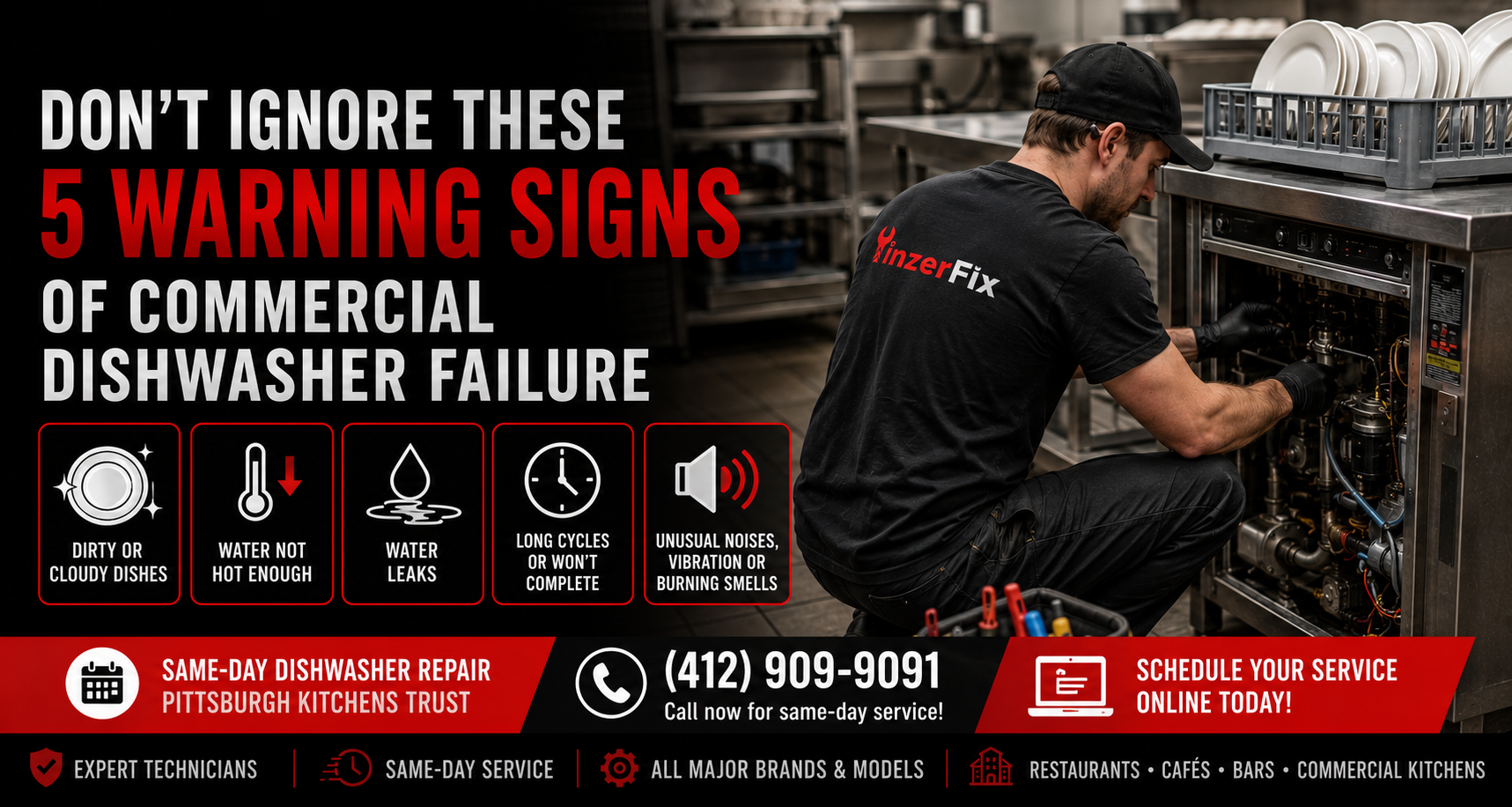
A commercial dishwasher is one of the hardest-working pieces of equipment in any Pittsburgh kitchen. Between back-to-back dinner rushes at a busy restaurant and the steady pace of a downtown café, this machine rarely gets a break. When it starts acting up, most owners try to push through service instead of stopping to look closer. That hesitation is exactly what turns a simple fix into an emergency call. If you're already noticing something "off," don't wait until the unit shuts down mid-shift — call YinzerFix at (412) 909-9091 or book a visit online and we'll have a technician on-site the same day in most cases.
Why Restaurants Can't Afford to Wait on Repairs
Health codes require dishes, glassware, and utensils to be properly sanitized before every use. When a unit isn't heating, draining, or cycling correctly, that requirement is at risk, and so is your ability to keep the line moving during a rush. Whether you run a full-service restaurant, a neighborhood bar, a coffee shop, or a catering kitchen, a struggling dishwasher affects every ticket that goes out.
1. Dishes Come Out Cloudy, Greasy, or Still Dirty
If glassware looks foggy or plates still have food residue after a full cycle, the machine is telling you something. On high-temp units, this often points to a heating element that isn't reaching sanitizing temperature. On low-temp, chemical-sanitizing units, it may mean the detergent or sanitizer pump isn't dispensing correctly. Either way, this is a food-safety issue, not just a cosmetic one.
2. Water Isn't Getting Hot Enough
A drop in water temperature is one of the clearest signs of commercial dishwasher failure. Causes range from a failing booster heater or thermostat to mineral buildup on heating elements from Pittsburgh's hard water. Left alone, this leads directly to failed health inspections.
3. Water Pooling on the Floor
Leaks around the door gasket, a cracked hose, or a worn seal can quickly turn into a slip hazard in a busy kitchen. Standing water near electrical components also raises safety concerns that shouldn't be ignored, even if the leak seems minor.
4. Longer Cycle Times or Cycles That Won't Complete
If staff are running dishes through twice or waiting longer than usual between racks, a control board, timer, or wash arm issue is likely slowing things down. This directly cuts into labor hours during peak service.
5. Unusual Noises, Vibration, or Burning Smells
Grinding, rattling, or a burning odor usually means a motor, pump, or wiring problem. These issues rarely resolve on their own and can escalate into a complete breakdown without warning.
Common Causes Across Gas, Electric, and High-Temp Equipment
Not every dishwasher fails for the same reason. Electric booster heaters often struggle with limescale buildup, while gas-fired water heaters feeding the unit can develop ignition or thermostat issues. High-temp sanitizing machines depend on a reliable final rinse temperature of 180°F, so any drop there is critical, while low-temp chemical units rely on properly calibrated dispensers that need regular checks. Knowing which type of system you're running helps a technician diagnose the real problem faster instead of guessing.
Simple Maintenance Steps That Prevent Bigger Repairs
Clean spray arms and filters daily to prevent clogs
Descale heating elements on a regular schedule, especially with hard water
Check door gaskets and seals monthly for wear
Confirm rinse temperatures with a thermometer periodically
Keep detergent and sanitizer levels properly calibrated
Schedule a professional inspection at least twice a year
When to Call for Restaurant Dishwasher Repair
If cleaning and basic upkeep don't resolve the issue, it's time for a trained technician. Restaurants, cafés, bars, and commercial kitchens throughout Pittsburgh count on equipment running correctly every single shift, and a delayed repair almost always costs more than an early one. Our team handles commercial dishwasher repair for all major brands and machine types, from undercounter units to high-volume conveyor systems. For kitchens dealing with more than one piece of struggling equipment, our commercial appliance repair services cover ranges, ovens, refrigeration, and dishwashers under one visit.
Conclusion
A commercial dishwasher rarely fails without warning. Cloudy dishes, weak water temperature, leaks, slow cycles, and strange noises are all signs worth acting on before they turn into a shutdown during service. YinzerFix offers same-day dishwasher repair Pittsburgh restaurants, cafés, bars, and commercial kitchens can count on. Call (412) 909-9091 or schedule your appointment today to keep your kitchen running without interruption.
Frequently Asked Questions
1. How do I know if my commercial dishwasher needs professional repair?
If dishes aren't coming out clean, water isn't reaching proper sanitizing temperature, or you notice leaks and unusual noises, it's best to have a technician inspect the unit before it fails completely.
2. What's the difference between high-temp and low-temp commercial dishwasher repair?
High-temp units rely on heated water for sanitizing and often need booster heater or thermostat repairs, while low-temp units use chemical sanitizers and typically need dispenser or pump adjustments.
3. Can hard water damage a commercial dishwasher?
Yes. Mineral buildup from hard water is a common cause of heating element failure and reduced water flow, both of which affect cleaning performance.
4. How often should a commercial dishwasher be serviced?
Most Pittsburgh restaurants and cafés benefit from a professional inspection twice a year, along with daily cleaning of filters and spray arms.
5. Do you offer Same-day dishwasher repair in Pittsburgh?
Yes. YinzerFix provides same-day dishwasher repair Pittsburgh restaurants, bars, and commercial kitchens rely on to avoid extended downtime.
Tags :
- Restaurant Dishwasher Repair
- Commercial Dishwasher Repair
- Commercial Dishwasher Repair Service
- Same Day Dishwasher Repair Pittsburgh
- Commercial Dishwasher Repair Pittsburgh
- Commercial Kitchen Dishwasher Repair
- High-Temp Dishwasher Repair
- Low-Temp Dishwasher Repair
- Commercial Dishwasher Maintenance
- Emergency Dishwasher Repair Pittsburgh