
Dishwasher Sanitizing Problems? Understanding High-Temp vs. Low-Temp Systems
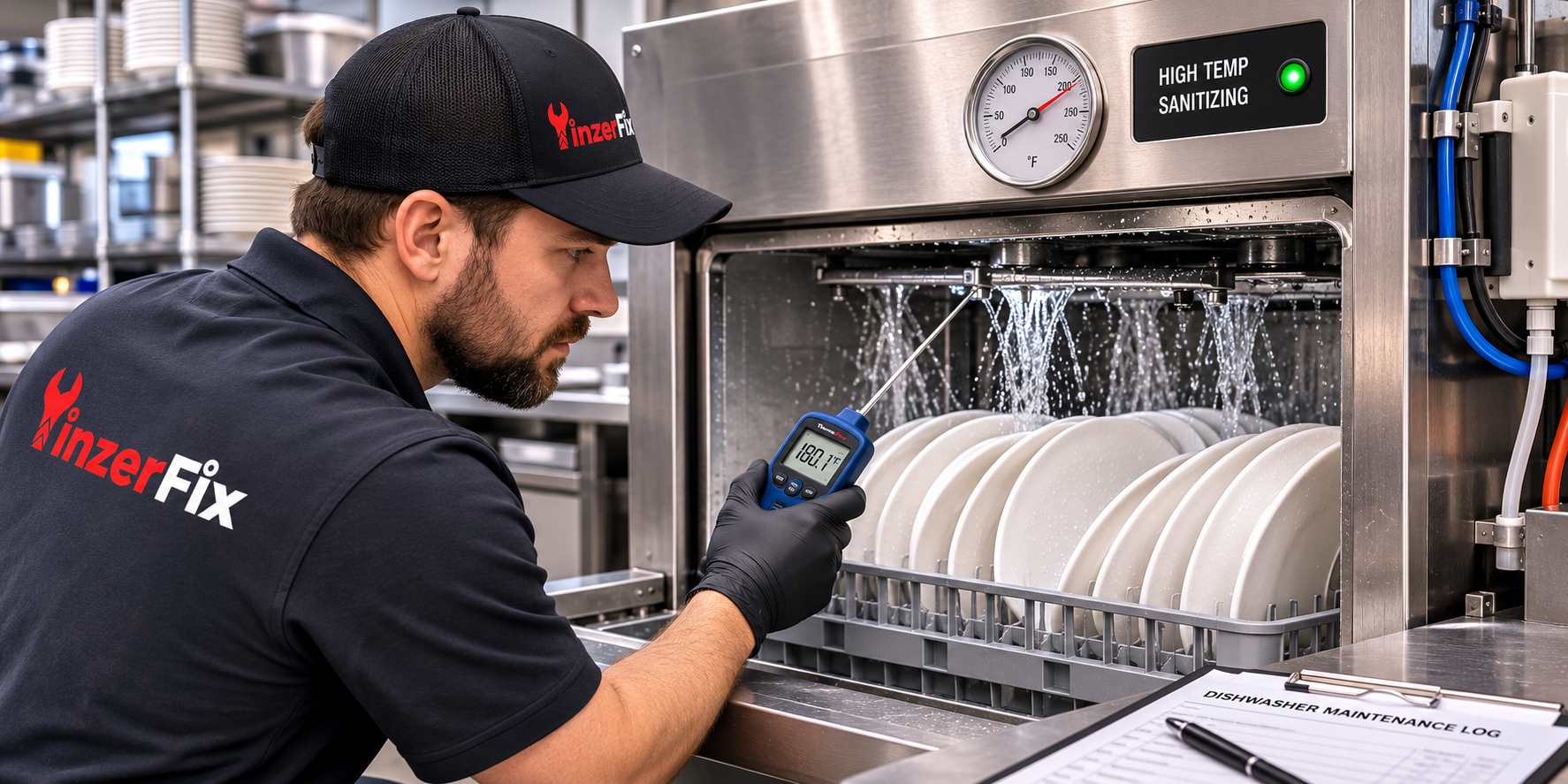
A failed health inspection or a stack of cloudy, still-dirty dishes usually traces back to one thing: a sanitizing cycle that isn't doing its job. For restaurants, cafés, bars, and commercial kitchens across Pittsburgh, understanding whether you're running a high-temp or low-temp dish machine is the first step to diagnosing the problem correctly — and getting it fixed before it affects service or compliance.
High-Temp vs. Low-Temp: Why the Difference Matters
Commercial dish machines sanitize dishes in one of two ways, and each has its own failure points.
High-temp systems rely on a final rinse that reaches at least 180°F to kill bacteria through heat alone. If that temperature drops even slightly, sanitization fails, even if the dishes look clean.
Low-temp systems use a chemical sanitizer, typically chlorine-based, injected during the final rinse at a lower water temperature. These machines depend on the chemical being dispensed at the correct concentration every single cycle.
Knowing which type your kitchen uses helps narrow down whether a booster heater, a chemical pump, or a control board is the likely culprit.
Common High-Temp Dishwasher Problems
Booster heater failure – prevents the final rinse from reaching required sanitizing temperature
Faulty thermostats or sensors – cause inaccurate temperature readings, leading to false sanitizing cycles
Scale and mineral buildup – insulates heating elements and slows heat transfer
Worn door gaskets – let heat and steam escape, dropping internal temperature
Clogged spray arms – reduce rinse pressure and uneven heat distribution
Common Low-Temp Dishwasher Problems
Empty or clogged chemical dispenser lines – result in under-sanitized dishes even when the cycle runs normally
Incorrect chemical concentration – too weak to sanitize, or too strong and damaging to dishware
Faulty dispenser pumps or sensors – fail to inject sanitizer at the right point in the cycle
Water hardness issues – interfere with how effectively the chemical sanitizer works
Expired or improperly stored sanitizing chemicals – lose effectiveness over time
Real Maintenance Advice for Restaurant and Commercial Kitchens
Whether you're running a high-temp or low-temp machine, a few habits reduce the odds of a sanitizing failure mid-shift:
Test final rinse temperature or chemical concentration with test strips at the start of each shift
Descale high-temp units regularly, especially in areas with hard water
Check chemical dispenser lines weekly for clogs or air bubbles
Replace worn door gaskets before they start leaking heat or water
Keep a maintenance log so recurring issues are caught early, not after a failed inspection
Don't wait until dishes come out cloudy or a health inspector flags a temperature issue. If your dish machine's readings seem off, call YinzerFix at (412) 909-9091 or book a same-day service visit — our technicians carry the test equipment needed to confirm whether it's a heating, chemical, or mechanical issue.
Why Restaurants and Commercial Kitchens Trust YinzerFix
From busy restaurant lines to café counters, bar kitchens, and catering operations, Pittsburgh food service businesses depend on properly sanitized equipment every single shift. Our technicians are experienced with both high-temp and chemical-sanitizing dish machines from all major commercial brands, and we know how quickly a sanitizing failure can turn into a compliance headache. If your kitchen is also dealing with uneven heating on your commercial cooktop or range, our team can evaluate multiple pieces of equipment in one visit to save you downtime.
Conclusion
A dishwasher that won't sanitize correctly is more than an inconvenience — it's a food safety risk. Understanding whether your kitchen relies on heat or chemical sanitization helps you and your technician diagnose the issue faster. For dependable commercial dishwasher repair service, including same-day appointments, contact YinzerFix Appliance Repair — Pittsburgh's trusted choice for restaurant and commercial kitchen equipment.
Frequently Asked Questions
1. How do I know if my dish machine is high-temp or low-temp?
Check the final rinse temperature gauge or look for a chemical sanitizer dispenser near the machine's control panel — your equipment manual will also specify the system type.
2. Why are my dishes still dirty after a full cycle?
This usually points to a spray arm blockage, insufficient rinse temperature, or an incorrect chemical concentration, all of which affect sanitizing performance.
3. Can hard water affect dishwasher sanitizing?
Yes. Mineral buildup can insulate heating elements in high-temp units and interfere with chemical effectiveness in low-temp systems.
4. How often should a commercial dishwasher be serviced?
Most restaurants and commercial kitchens benefit from professional inspection every three to six months, depending on usage volume.
5. Does YinzerFix offer same-day dishwasher repair in Pittsburgh?
Yes. We provide same-day and emergency commercial dishwasher repair for restaurants, cafés, bars, and commercial kitchens throughout the Pittsburgh area.