
Commercial Refrigerator Not Cooling? 8 Causes and What to Check Before Calling a Tech
When a walk-in cooler or reach-in unit stops holding temperature, every hour puts your inventory at risk. If you need commercial refrigerator repair Pittsburgh restaurants, cafés, and bars can trust, a few quick checks can help narrow down the problem before a technician arrives.
Why a Warm Cooler Can’t Wait
Cold food should stay at or below 41°F. For restaurants, cafés, bars, and commercial kitchens across Pittsburgh, a failing unit can mean spoiled product, health code violations, and lost service hours. Catching the cause early often separates a minor fix from a total loss of stock. That’s why Same-Day Commercial Refrigerator Repair matters: the sooner a technician finds the fault, the more of your inventory you can save.
8 Common Causes of a Commercial Refrigerator Not Cooling
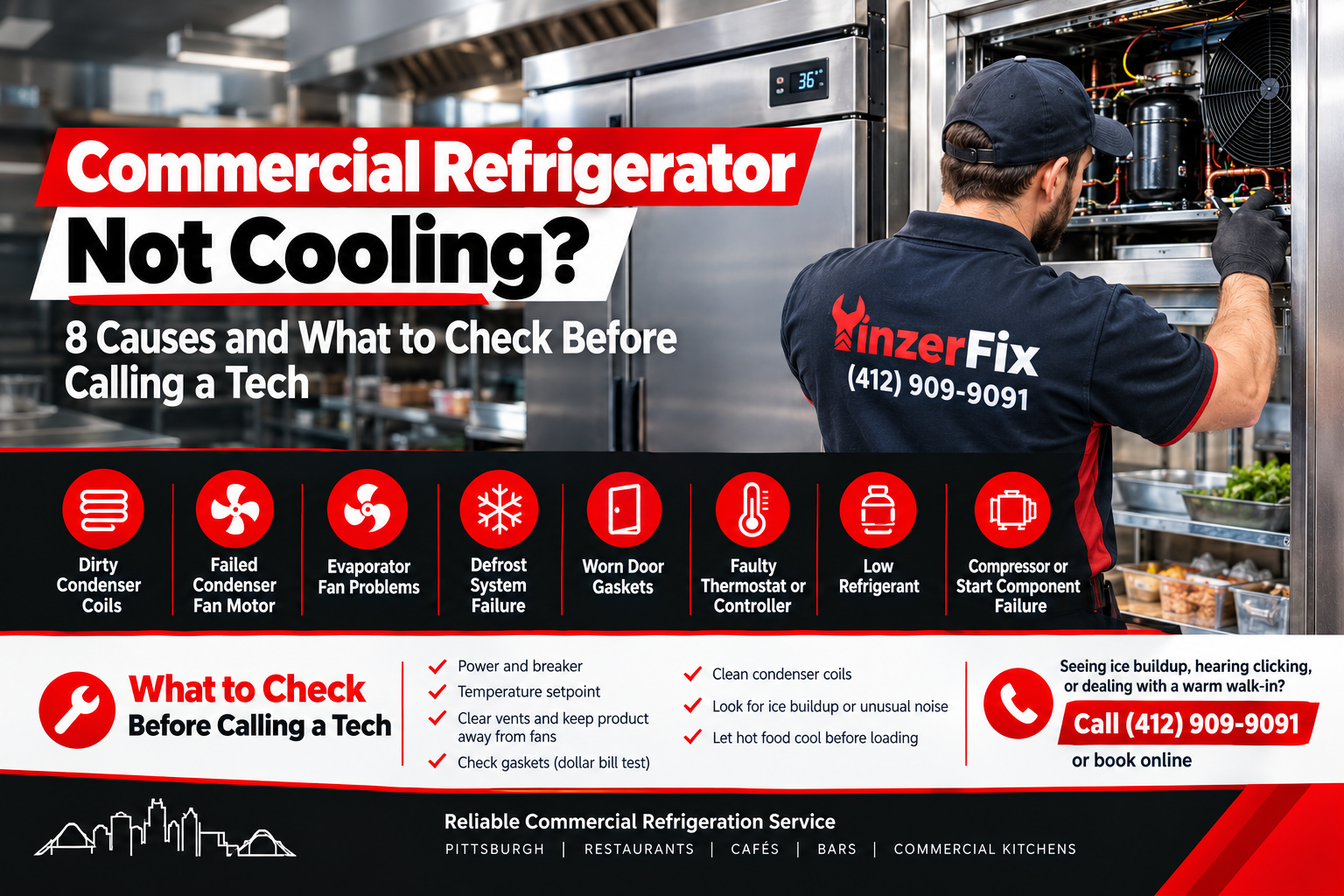
Dirty condenser coils: Grease and dust block heat release and force the compressor to overwork.
Failed condenser fan motor: Without airflow across the coils, the system overheats and cooling drops.
Evaporator fan problems: A dead fan traps cold air near the coil instead of circulating it.
Defrost system failure: A bad heater or timer lets ice build up and choke airflow.
Worn door gaskets: Leaking seals let warm air in, especially on busy reach-in coolers.
Faulty thermostat or controller: Incorrect readings can shut the compressor off too early.
Low refrigerant: Leaks reduce cooling capacity and need professional repair.
Compressor or start component failure: A bad capacitor or relay can keep the compressor from starting.
What to Check Before Calling a Tech
Turn off power before cleaning anything, then try these steps:
Confirm the unit is plugged in and the breaker hasn’t tripped.
Verify the temperature setpoint, usually 35–38°F for coolers.
Clear blocked vents and keep product away from the evaporator fan.
Try the dollar bill test. If a bill slides out easily when the door is closed, the gasket isn’t sealing.
Brush or vacuum the condenser coils.
Look for ice on the coil, and listen for fan noise or repeated clicking.
Let hot food cool before loading it into the unit.
Seeing ice buildup, hearing clicking, or dealing with a warm walk-in? Call (412) 909-9091 or book online.
How Gas, Electric, and Induction Cooking Lines Affect Refrigeration
Coolers often sit right beside cooking equipment. Gas ranges and fryers radiate heat that raises ambient temperature, so condensers work harder. Electric equipment adds a similar heat load. Induction runs cooler but still needs ventilation space. Leave clearance around every unit, and keep heat sources away from coils and vents. Many kitchens also benefit from coordinated service across all their equipment.
Simple Maintenance to Prevent Breakdowns
Clean condenser coils every one to three months, and more often in greasy kitchens.
Replace cracked or torn gaskets promptly.
Keep drain lines and defrost drains clear.
Schedule professional inspections twice a year.
When It’s Time for Professional Help
If basic checks don’t restore cooling, stop opening the door and move perishables to backup storage. Refrigerant leaks, compressor faults, and electrical failures need a trained technician. We service reach-ins, walk-ins, prep tables, and bar coolers through our commercial refrigeration services.
Conclusion
A commercial refrigerator that isn’t cooling doesn’t have to shut down your kitchen. Whether you need a dependable Commercial Fridge Repair Service or Same-Day Commercial Refrigerator Repair, YinzerFix is ready to help. As a local name in Pittsburgh Appliance Repair, we support businesses searching for Appliance Repair Pittsburgh with fast, professional commercial care. Call (412) 909-9091 today.
Frequently Asked Questions
1. Why is my commercial refrigerator running but not cooling?
Dirty coils, a failed fan motor, or low refrigerant are common causes. Cleaning the coils is a safe first check.
2. What temperature should a commercial refrigerator maintain?
Keep it at or below 41°F. Most operators set coolers between 35°F and 38°F.
3. Can a bad door gasket cause cooling problems?
Yes. Leaking seals let warm air in, which raises temperatures and causes the compressor to run constantly.
4. How often should commercial refrigeration be serviced?
Most businesses benefit from professional service once or twice a year, depending on usage.
Tags :
- Commercial Refrigerator Repair Pittsburgh
- Commercial Refrigerator Repair
- Commercial Refrigerator
- Refrigerator Repair
- Refrigerator
- Commercial Fridge Repair Service
- Same-Day Commercial Refrigerator Repair
- Fridge Repair Service
- Fridge Repair
- Fridge
- Pittsburgh Appliance Repair
- Appliance Repair Pittsburgh
- Appliance Repair
- local repair
- Walk-in cooler repair Pittsburgh
- Emergency commercial refrigerator repair
- Emergency refrigerator repair
- Emergency repair
- Commercial kitchen refrigeration repair
- kitchen refrigeration repair
- Commercial kitchen refrigeration
- Commercial refrigerator compressor not starting