
Commercial Refrigeration Repair Pittsburgh | Walk-In Cooler Fixes
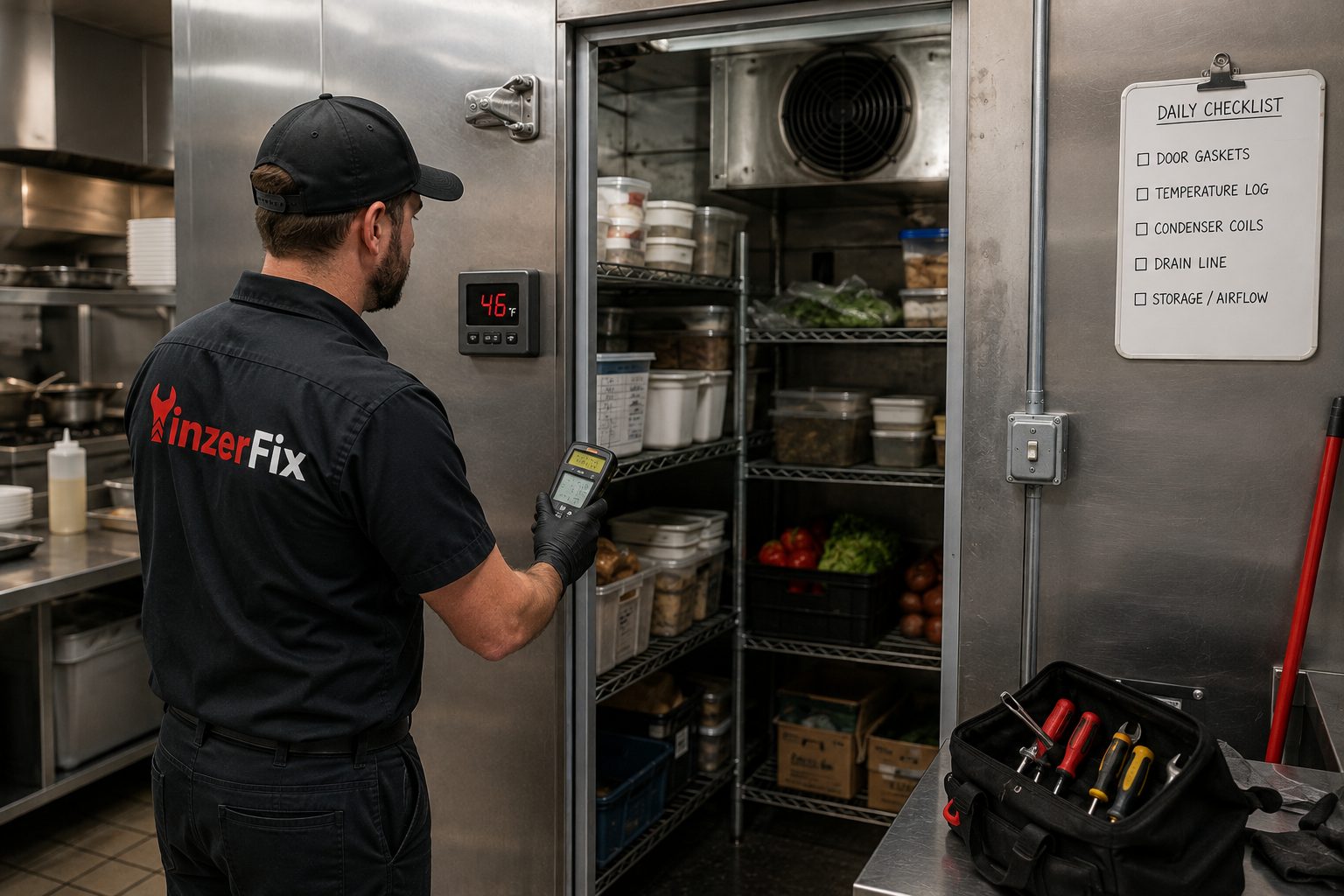
A temperature log that keeps creeping upward is usually the first sign something's wrong with your walk-in cooler. For restaurants, cafés, bars, and commercial kitchens across Pittsburgh, that slow climb can mean lost inventory, a failed health inspection, or a shift spent scrambling to move product into backup coolers. Before the problem turns into a full shutdown, here's the troubleshooting order most kitchens should follow — and when it's time to bring in a Commercial Refrigeration Repair Pittsburgh team.
Start With the Door, Not the Compressor
It sounds simple, but door problems cause more temperature complaints than any mechanical failure. Warped door frames, torn gaskets, or a door that doesn't fully latch let warm kitchen air pour in every time staff walk through during a rush. Over a busy dinner service, that constant air exchange alone can push internal temperatures up several degrees, even with a perfectly healthy compressor.
A Quick Diagnostic Checklist Before Calling for Service
Run through these steps before assuming you need Commercial Walk in Cooler Repair:
Inspect the door gasket for tears, gaps, or areas where it no longer seals flush against the frame.
Check the condenser fan to confirm it's spinning freely and not caked in grease or dust.
Look for ice buildup on the evaporator coil, which usually points to a defrost cycle that isn't completing.
Verify the thermostat hasn't been bumped or reset by staff during cleaning or restocking.
Clear the drain line if you notice water pooling on the floor, since a clogged drain often leads to iced-over coils.
Review your storage layout to make sure boxes or bins aren't blocking the airflow path from the evaporator fan.
If temperatures are still off after these checks, it's a strong sign the issue is mechanical rather than something staff can fix on-site.
What's Really Behind Most Cooling Failures
Once the basics are ruled out, Walk in Cooler Repair calls in Pittsburgh usually trace back to one of a handful of causes: a refrigerant leak that's slowly reducing cooling capacity, a compressor nearing the end of its life cycle, a failed start relay, or a defrost timer that's stuck in the wrong cycle. Refrigerant issues are especially deceptive — the unit keeps running, fans keep spinning, but the space just never gets cold enough, and the problem tends to get worse gradually rather than all at once.
If your walk-in has been running above a safe holding temperature for more than an hour or two, don't wait for it to correct itself. Call YinzerFix at (412) 909-9091 or schedule a technician online so your inventory doesn't sit at risk while you troubleshoot.
Why Pittsburgh Kitchens Can't Afford to Wait
Restaurants, cafés, bars, and commercial kitchens all operate on tight margins where spoiled inventory hits hard. A cooler running warm for even half a shift can mean throwing out proteins, dairy, and prepped items that took hours to prepare. That's why fast, reliable Commercial Refrigeration Service Pittsburgh businesses trust matters as much as the repair itself — a technician who shows up quickly limits the damage before it spreads to your whole walk-in.
Building a Maintenance Routine That Prevents This
Most temperature failures don't happen overnight; they build up over weeks of missed maintenance. Wiping down door gaskets weekly, vacuuming condenser coils monthly, logging temperatures at the start and end of each shift, and scheduling a professional refrigeration inspection each season all help catch small issues before they become emergencies. It's a habit worth building into your kitchen's opening and closing checklists.
Conclusion
When a walk-in cooler starts losing temperature, working through the door seal, condenser fan, coils, and drain line first can save you an unnecessary service call. But if the problem persists, it's usually a sign of a mechanical failure that needs a trained technician. YinzerFix Appliance Repair works with restaurants, cafés, bars, and commercial kitchens throughout Pittsburgh, providing dependable Commercial Refrigeration Repair Pittsburgh service to get your cold storage back on track quickly.
Frequently Asked Questions
1. How long can a walk-in cooler run warm before food becomes unsafe?
Generally, perishable food shouldn't sit above 41°F for more than two hours. If your cooler has been out of range longer than that, inventory should be evaluated for safety.
2. What's the most common reason a walk-in cooler stops cooling properly?
Door seal failure and dirty condenser coils are the most frequent causes, followed by refrigerant leaks and aging compressors.
3. Can a walk-in freezer have the same temperature problems as a cooler?
Yes. Walk-in freezer repair often involves the same root causes — iced coils, failing fans, and door seal issues — just at a lower operating temperature.
4. Is it normal for a walk-in cooler to cycle on and off frequently?
Some cycling is normal, but very short or constant cycling can indicate a thermostat problem or a compressor that's struggling to keep up.
5. How often should Pittsburgh restaurants schedule refrigeration maintenance?
A professional inspection every three to four months, combined with weekly in-house checks, helps most commercial kitchens avoid unexpected breakdowns.