
Commercial Ice Machine Slowing Down? Here's Why Ice Production Drops
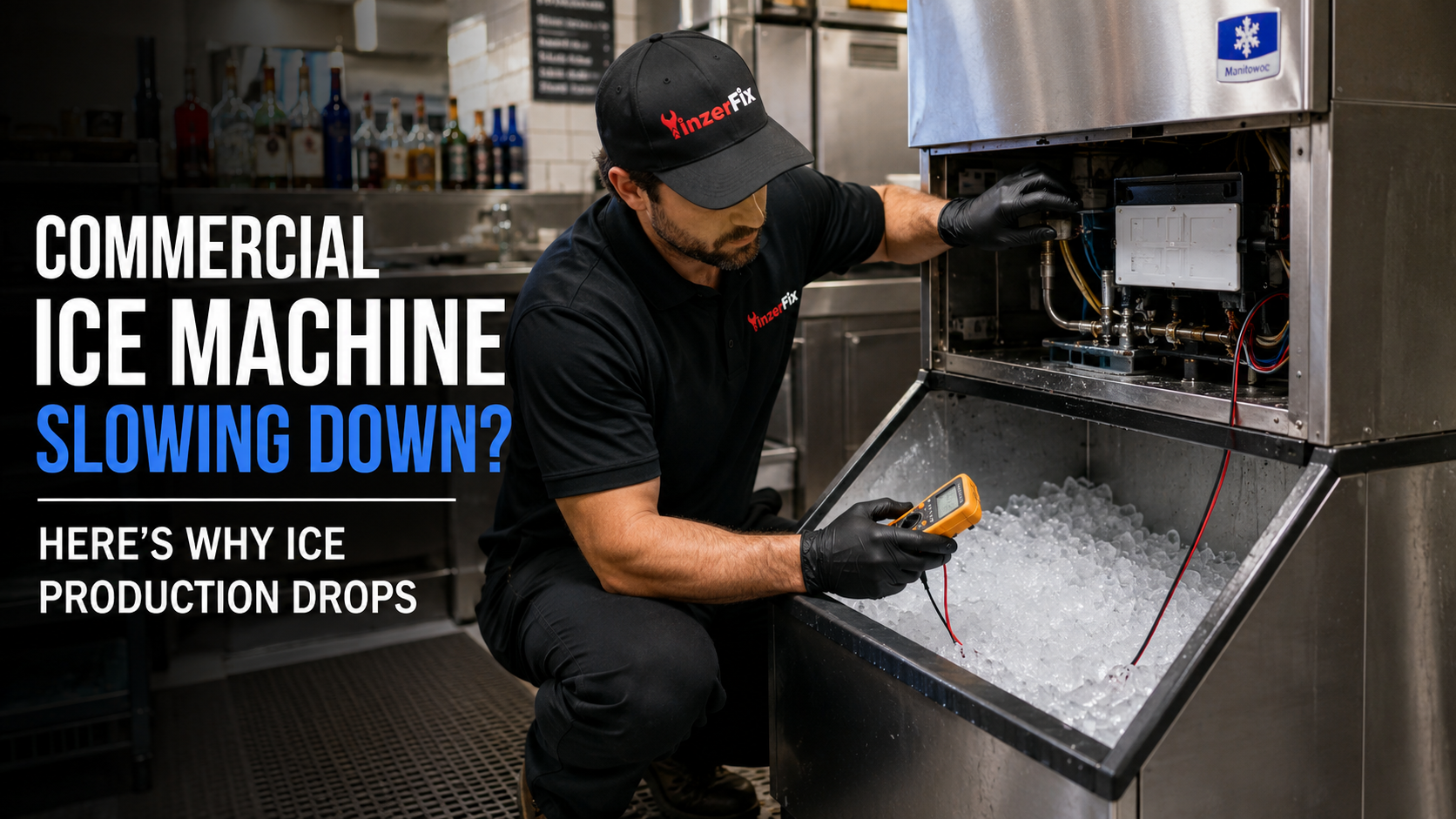
For Pittsburgh restaurants, bars, cafés, and commercial kitchens, a steady supply of ice isn't a luxury — it's part of daily operations. When a commercial ice machine starts producing less ice than usual, it can slow down bar service, delay food prep, and frustrate both staff and customers. If you've noticed your machine struggling to keep up, you're not alone, and the good news is that most causes of reduced ice production can be diagnosed and corrected before they turn into a full breakdown.
Why Ice Production Slows Down Over Time
Ice machines work hard every day, and like any commercial equipment, performance naturally declines without regular upkeep. Mineral scale from hard water is one of the most common culprits, building up on evaporator plates and water lines until the unit simply can't freeze water as quickly. Dirty condenser coils are another frequent issue — when airflow is restricted, air-cooled units run hotter and produce ice more slowly, while water-cooled systems can suffer from reduced water flow and inconsistent temperatures. Low refrigerant levels, a failing water pump, or a worn compressor can all reduce output as well, even when the machine still appears to be running normally.
Need it looked at right away? Call YinzerFix at (412) 909-9091 or book a same-day appointment online — we serve restaurants, cafés, bars, and commercial kitchens throughout Pittsburgh.
Common Signs Your Ice Machine Needs Repair
Reduced output rarely happens without warning. Watch for these signs:
Smaller or thinner ice cubes than normal
Longer freeze cycles between ice drops
Cloudy or off-tasting ice
Unusual noises from the compressor or fan
Water pooling around the base of the unit
Higher energy bills without a change in usage
The bin filling much slower than usual during peak hours
Different Ice Machines, Different Problems
Not every unit fails the same way. Modular ice machines mounted above a bin often lose efficiency due to clogged water filtration or scaled-up evaporator plates. Undercounter and combination units, common in smaller bars and cafés, are more prone to airflow restriction since they sit in tight spaces with limited ventilation. Water-cooled systems, popular in older buildings, can slow down when the water regulating valve sticks or mineral deposits build up in the condenser. Brands like Hoshizaki, Manitowoc, Scotsman, and Ice-O-Matic each have their own control board quirks, which is why an experienced technician who works across multiple brands can usually pinpoint the issue faster than trial and error.
Routine Maintenance Makes a Real Difference
Many ice production problems are preventable. Cleaning and descaling the unit every three to six months, replacing water filters on schedule, and keeping condenser coils free of grease and dust go a long way toward maintaining consistent output. For high-volume establishments like bars and catering kitchens, more frequent inspections are worth the investment compared to losing ice service during a busy weekend shift.
When to Call a Professional
If cleaning doesn't restore normal ice production, it's time for a trained technician to take a closer look. A professional Commercial Ice Machine Repair Service can check refrigerant charge, inspect electrical components, test water pressure, and identify worn parts before they cause a complete shutdown. For kitchens dealing with related cooling issues, it's also worth reviewing your commercial refrigeration equipment, since ice machines often share the same water lines and electrical circuits as walk-in coolers and reach-in units.
Conclusion
A commercial ice machine that's slowing down is usually telling you something before it fails completely. Whether it's scale buildup, airflow restriction, or a worn compressor, catching the problem early keeps your restaurant, café, bar, or commercial kitchen running without interruption. If your ice production has dropped, don't wait for a full breakdown during a busy shift — reach out to YinzerFix Appliance Repair at (412) 909-9091 or schedule service online for fast, reliable ice machine repair Pittsburgh businesses trust.
Frequently Asked Questions
1. Why is my ice machine making less ice than before?
Reduced output is usually caused by scale buildup, dirty condenser coils, low refrigerant, or a failing water pump.
2. How often should a commercial ice machine be cleaned?
Most manufacturers recommend cleaning and descaling every three to six months, though high-use businesses may need it more often.
3. Can hard water affect ice production?
Yes. Mineral deposits from hard water are one of the leading causes of slow ice production and can also affect ice quality.
4. Is it worth repairing an older ice machine?
In many cases, yes. Component repairs are often more cost-effective than replacement, especially for units under eight to ten years old.
5. How quickly can YinzerFix respond to a commercial ice machine issue?
We offer same-day and next-day service across Pittsburgh to minimize downtime for restaurants, bars, and commercial kitchens.