
Commercial Ice Machine Cleaning: How Often Is Enough? | YinzerFix
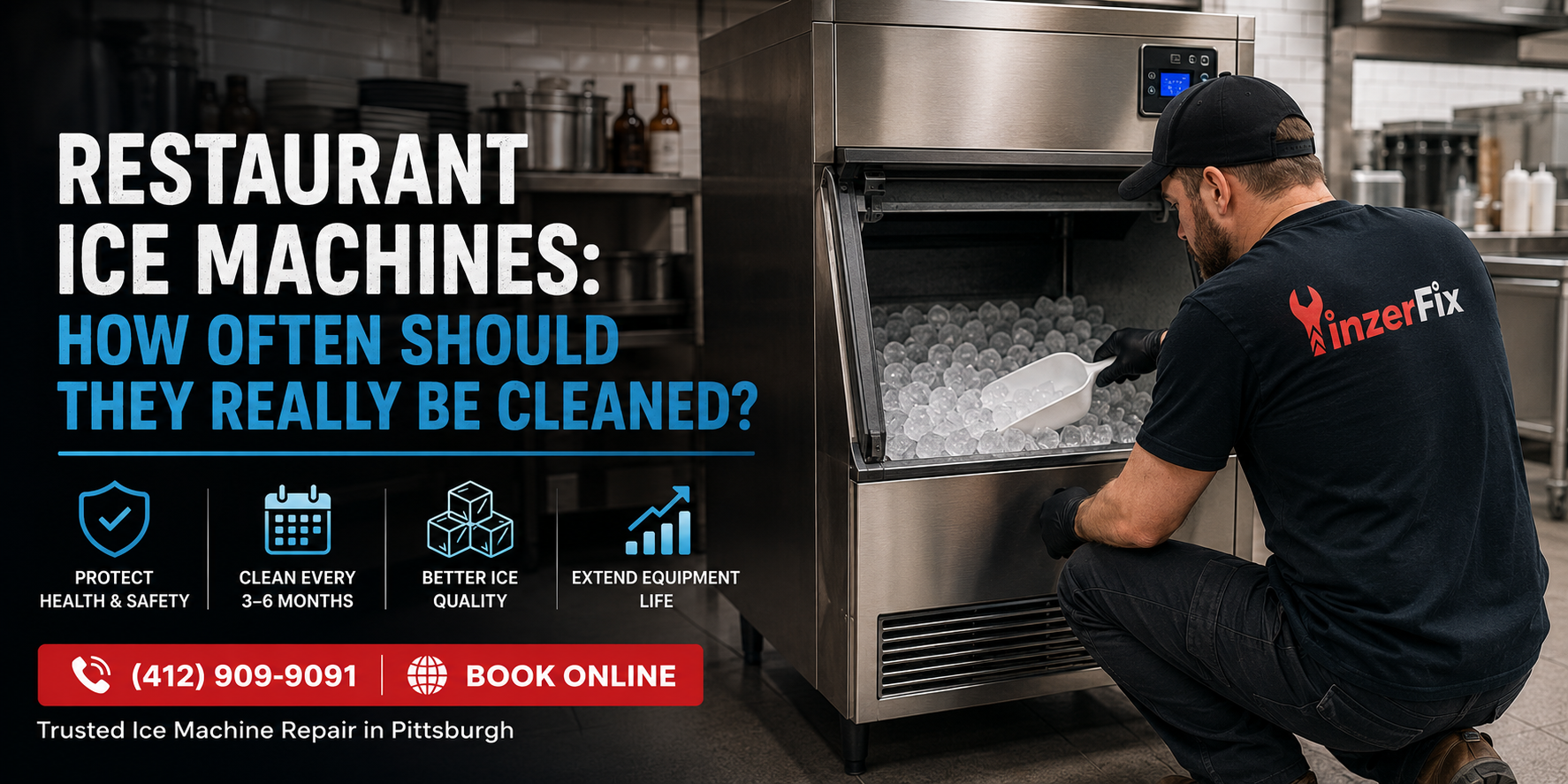
Ice might seem like the simplest thing on your menu, but a commercial ice machine that isn't cleaned on schedule can quietly become one of the biggest health and equipment risks in a restaurant, café, bar, or commercial kitchen. Mineral buildup, mold, and bacteria grow easily inside warm, humid ice bins, and most owners don't notice a problem until ice starts tasting off, melting too fast, or coming out cloudy. Here's what Pittsburgh food service operators need to know about keeping their ice equipment clean, efficient, and code-compliant.
Why Ice Machine Cleaning Matters More Than Owners Think
Unlike a fridge or freezer, an ice maker constantly cycles water through internal components that stay damp between batches. That moisture creates an ideal environment for mold, yeast, and slime buildup on evaporator plates, water lines, and the interior of the ice bin. Health inspectors treat ice as a food product, which means a dirty machine can lead to citations, and in some cases, a temporary shutdown. For restaurants, cafés, bars, and catering kitchens that go through hundreds of pounds of ice a day, skipping cleanings isn't a minor oversight — it's a liability.
How Often Should a Commercial Ice Machine Be Cleaned?
Most manufacturers and health departments recommend a full cleaning and sanitizing every three to six months, but real-world usage often demands more frequent attention:
High-volume bars and restaurants: every 3 months or sooner
Cafés and lower-volume kitchens: every 4–6 months
Machines near grease-heavy kitchen equipment or poor ventilation: monthly inspections recommended
Any time ice has an odd smell, taste, or slow production: clean immediately, regardless of schedule
Between deep cleanings, wiping down the bin, scoop, and door daily helps prevent buildup from getting ahead of you.
Common Signs Your Ice Machine Needs Attention
Cloudy, misshapen, or smaller-than-normal ice cubes
Slower ice production than usual
Musty or "off" smell coming from the bin
Visible scale or pink/black slime on interior surfaces
Water pooling or draining slowly
Higher-than-normal energy use from the unit
If your team is noticing any of these, it's worth scheduling a professional Commercial Ice Machine Repair Service before the issue affects food safety or shuts the unit down during a rush.
Not Cleaning Regularly Costs More Than You'd Expect
A neglected ice machine doesn't just risk a health code violation — it wears out faster. Scale buildup forces the compressor and water pump to work harder, which raises utility bills and shortens the lifespan of components that are expensive to replace. Many of the same commercial refrigeration issues we see in walk-in coolers and reach-ins show up in ice machines for the same reason: mineral deposits and neglected maintenance quietly reduce efficiency long before a full breakdown happens.
Need help now? Whether you run a busy bar downtown or a café in Shadyside, our team offers same-day Ice Machine Repair in Pittsburgh — call (412) 909-9091 or book online and we'll get your ice production back on track.
Cube, Flake, or Nugget: Cleaning Needs Vary by Machine Type
Not every ice maker is built the same, and cleaning schedules should reflect that:
Cube machines (common in bars): prone to scale buildup around the evaporator plate, especially with hard water
Flake ice machines (common in seafood and grocery displays): higher moisture exposure means mold risk builds faster
Nugget/pellet machines (popular in cafés and self-serve stations): auger components need regular descaling to avoid jamming
Knowing your machine type helps a technician target the right cleaning approach instead of a one-size-fits-all service.
When to Call a Professional Instead of DIY Cleaning
Basic exterior wipe-downs are fine for staff to handle, but full descaling, sanitizing water lines, and inspecting refrigerant components should be left to a trained technician. Taking a machine apart incorrectly can damage seals, void warranties, or leave sanitizer residue behind. A qualified Commercial Ice Machine Repair Service can also catch early signs of compressor strain or water valve failure — problems a routine wipe-down won't reveal.
Conclusion
Ice quality reflects directly on your kitchen's standards. Staying ahead of buildup with a consistent cleaning schedule protects your customers, your health inspection scores, and the lifespan of your equipment. When it's time for a deeper clean or repair, YinzerFix provides trusted Commercial Ice Machine Repair Service and Ice Machine Repair in Pittsburgh for restaurants, bars, cafés, and commercial kitchens across the city.
Frequently Asked Questions
1. How often should a commercial ice machine be professionally cleaned?
Most units need a full cleaning every three to six months, though high-volume bars and restaurants often need it more frequently.
2. What happens if a restaurant ice machine isn't cleaned regularly?
Buildup of scale, mold, and bacteria can lead to health code violations, reduced ice quality, and premature equipment failure.
3. Can dirty ice make customers sick?
Yes. Since ice is classified as a food product, contamination from an unclean machine can pose real health risks to customers.
4. Do all types of ice machines need the same cleaning schedule?
No. Cube, flake, and nugget machines each have different moisture exposure and components, so cleaning needs can vary.
5. Should I clean my ice machine myself or hire a technician?
Daily wipe-downs are fine for staff, but full descaling and sanitizing of internal components should be handled by a professional to avoid damage or incomplete cleaning.