
Commercial Dish Machine Repair: Fast Fixes for Busy Restaurant Kitchens
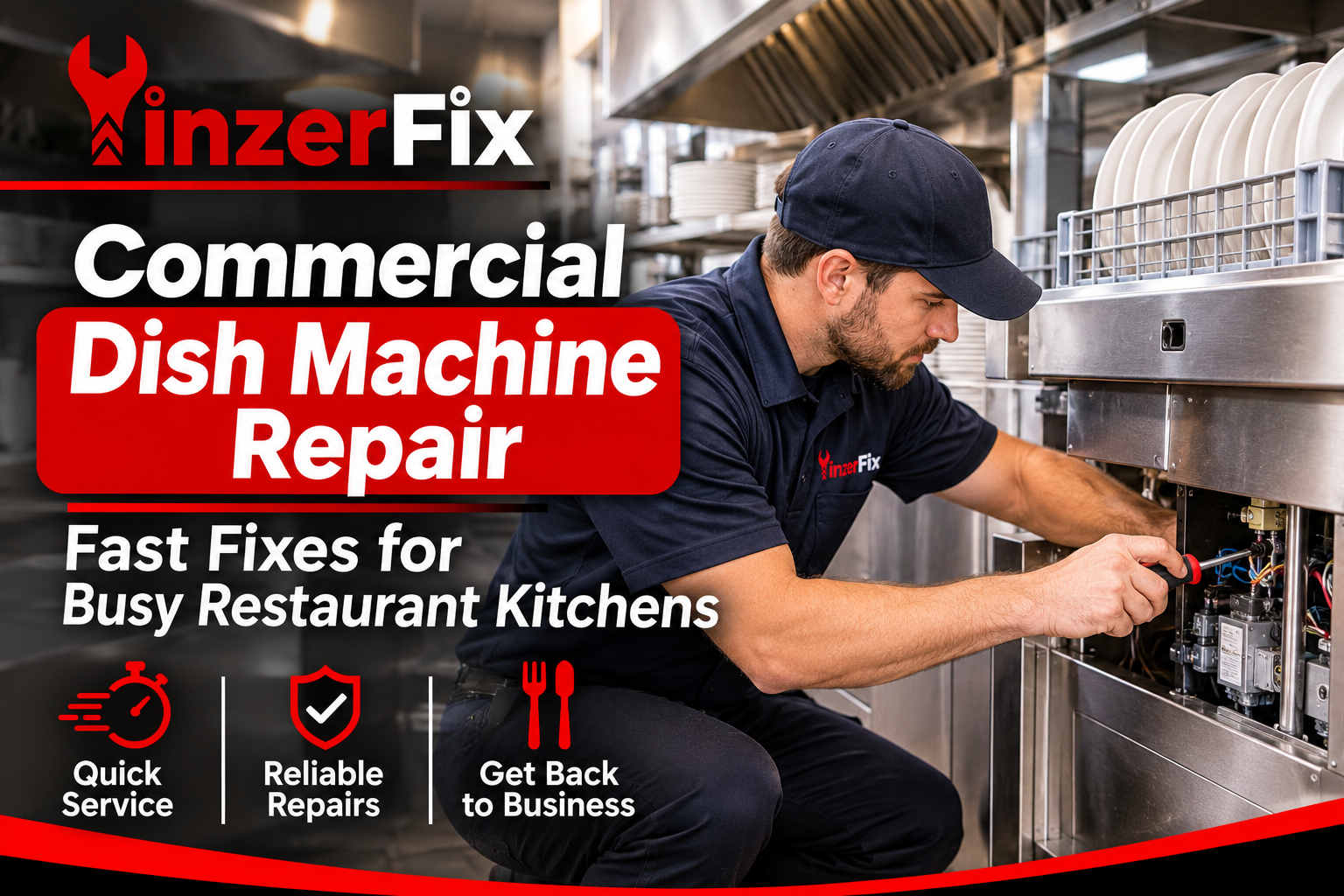
When a dish pit goes down during the dinner rush, every minute costs money. Fast commercial dish machine repair keeps clean plates, glasses, and utensils moving, protects your health inspection score, and prevents expensive shutdowns. At YinzerFix® Appliance Repair, we help kitchens diagnose problems quickly, fix them correctly, and avoid repeat breakdowns. This guide explains what to watch for, what typically fails, and when to call a professional.
What Is Commercial Dish Machine Repair?
Commercial dish machine repair is the diagnosis and correction of faults in high-volume warewashing equipment, including door-type, conveyor, undercounter, and rack machines. A qualified technician inspects wash and rinse systems, heating elements, pumps, spray arms, sensors, and chemical feeds. The goal is to restore proper water temperature, sanitizing performance, and cycle times so the machine meets health code standards.
Unlike household units, these machines run dozens of cycles daily. That heavy workload makes professional restaurant dishwasher service far more important than a quick DIY fix.
Signs Your Restaurant Dishwasher Needs Service
Catching trouble early can turn a major repair into a minor one. Watch for these warning signs:
Dishes come out cloudy, greasy, or covered in food residue
Final rinse temperature falls below the required range
Water leaks around the door, base, or hoses
Unusual grinding, rattling, or humming during cycles
Longer cycle times or slow draining
Error codes or tripped breakers
Strong odors or visible scale buildup
Cloudy Glasses and Spotty Dishes
Spotting usually points to hard water, clogged wash arms, or low rinse aid levels. In many cases, a deep descaling and nozzle cleaning solves it. If the problem returns, a technician should check the rinse pump and booster heater.
Machine Won't Fill, Drain, or Start
Failure to fill often traces back to a faulty water inlet valve, float switch, or door switch. Draining problems typically come from clogged strainers or a failing drain pump. A professional can test each component safely, so you avoid electrical and plumbing hazards.
Common Industrial Dishwasher Repair Problems and Causes
The most frequent industrial dishwasher repair calls involve a handful of recurring issues:
Failed heating element: Water never reaches proper wash or sanitizing temperature.
Worn wash pump or motor: Weak spray pressure leaves dishes dirty.
Clogged spray arms: Mineral deposits block jets and reduce coverage.
Faulty thermostats and sensors: Incorrect readings cause cycle errors.
Damaged door gaskets and curtains: Leaks waste water and heat.
Chemical feed problems: Detergent, rinse aid, or sanitizer pumps deliver the wrong amount.
Hard water is a leading culprit. Scale coats heating elements and forces them to work harder, which shortens their lifespan. Installing a water softener or filtration system often pays for itself.
High-Temp vs. Low-Temp Machines: Why It Matters
High-temperature machines sanitize with very hot final rinse water, while low-temperature (chemical sanitizing) models rely on a chlorine-based sanitizer. Each type fails differently. High-temp units usually struggle with booster heaters and thermostats. Low-temp units more often develop chemical dispensing issues. Knowing your machine type helps your technician pinpoint faults faster and keeps you compliant with local health codes.
Preventive Maintenance Checklist for Commercial Dishwashers
Routine care is the cheapest form of commercial dish machine repair. Build these habits into your daily and weekly routine:
Scrape and pre-rinse dishes to keep food debris out of the machine.
Empty and clean strainers, scrap trays, and filters every shift.
Drain and flush the tank at the end of each day.
Delime the machine on a regular schedule, based on your water hardness.
Check chemical levels and test sanitizer concentration with test strips.
Inspect spray arms and rinse nozzles for clogs.
Schedule professional inspections at least twice a year.
A written log helps spot patterns and supports your records during inspections.
Should You Repair or Replace a Commercial Dishwasher?
A common rule of thumb: if repair costs approach 50 percent of a new unit's price, and the machine is past 8 to 10 years old, replacement may make sense. However, repair is usually the smarter choice when the problem involves a single part, such as a pump, valve, or heating element. Newer ENERGY STAR® certified models can also cut water and energy use, so ask your technician to compare long-term operating costs before you decide.
Why Choose YinzerFix® for Restaurant Dishwasher Service?
YinzerFix® Appliance Repair understands that food service never stops. Our technicians offer:
Prompt diagnostics and transparent estimates
Experience with leading commercial warewashing brands
Repairs for restaurants, cafeterias, bars, hotels, and healthcare kitchens
Preventive maintenance plans that reduce surprise downtime
Honest advice on repair versus replacement
Learn more about our commercial dishwasher repair services or schedule a visit today.
Final Thoughts
A reliable dish machine protects your food safety standards, your staff's time, and your bottom line. Whether you need urgent commercial dish machine repair, routine restaurant dishwasher service, or expert industrial dishwasher repair, YinzerFix® Appliance Repair is ready to help. Contact us today to book service and keep your kitchen running smoothly.
Frequently Asked Questions
1. How much does commercial dish machine repair cost?
Costs vary by machine type, parts, and labor. Minor fixes like replacing a gasket or cleaning a clogged arm cost far less than replacing a heating element or wash motor. Request a written estimate before any work begins.
2. How often should a restaurant dishwasher be serviced?
Most commercial kitchens benefit from professional service every six months. High-volume operations or areas with hard water may need quarterly visits.
3. Why is my commercial dishwasher not cleaning dishes?
Common causes include clogged spray arms, low water temperature, incorrect detergent levels, worn pumps, or dirty filters. Start by cleaning strainers and checking chemical supplies, then call a technician if the problem continues.
4. How long do commercial dishwashers last?
With consistent maintenance, most last 10 to 15 years. Poor water quality and skipped cleaning can shorten that lifespan considerably.
5 Can I repair an industrial dishwasher myself?
Operators should handle daily cleaning and basic checks only. Electrical, plumbing, and heating repairs should be left to a licensed technician for safety and warranty reasons.