
Built-In or Portable? Choosing the Right Dishwasher for Your Kitchen Layout
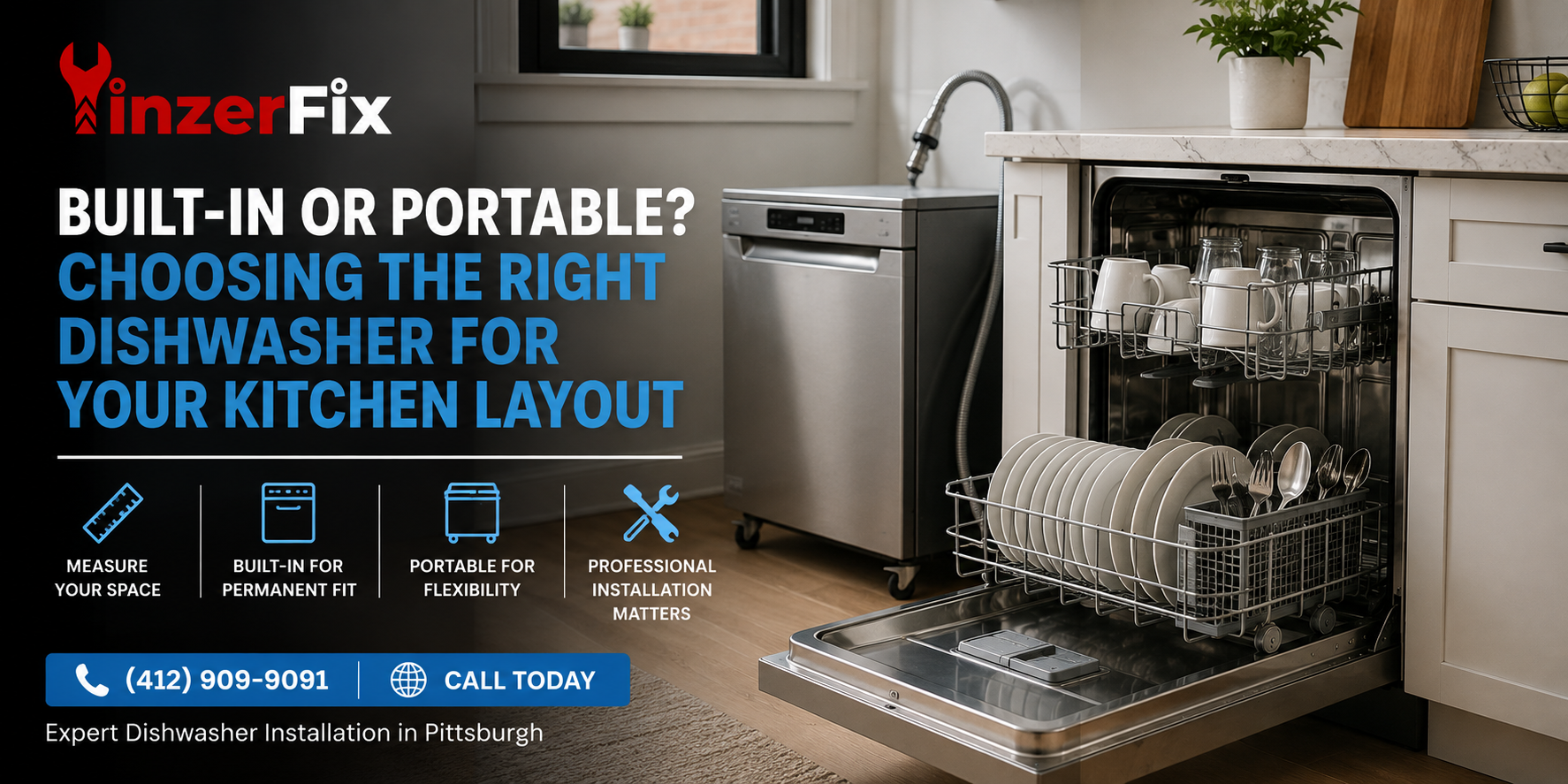
Choosing a new dishwasher is not just about brand or price. It is about whether the unit will actually fit your kitchen, your plumbing, and the way your household cooks and cleans. Homeowners across Pittsburgh often assume any dishwasher will work in any kitchen, but layout, cabinet space, and water access all play a role in getting a reliable, long-lasting result. Here is what to consider before your next installation.
Why Kitchen Layout Matters Before You Buy
Every kitchen has different constraints. Older homes in neighborhoods like Squirrel Hill or Bloomfield may have narrow cabinet openings or plumbing that was never designed for a dishwasher at all. Newer builds and renovated kitchens usually have a dedicated 24-inch cutout ready to go. Before purchasing a new dishwasher, measure your available space and check for an existing water line, drain, and electrical outlet. This single step prevents most installation headaches.
Built-In Dishwashers: Best for Permanent Kitchen Setups
A built-in, or under-counter, dishwasher slides into a cabinet space and connects directly to your home's plumbing and electrical system. Benefits include:
A seamless, integrated look that matches surrounding cabinetry
Larger capacity for families or frequent entertaining
Quieter operation with better insulation
Higher resale value for the home
The tradeoff is that built-in units require a dedicated water supply line, drain connection, and often a 120V electrical circuit. If your kitchen was never plumbed for a dishwasher, this may involve some carpentry and plumbing work in addition to the appliance install itself.
Portable Dishwashers: A Practical Option for Renters and Smaller Kitchens
Portable dishwashers connect temporarily to your kitchen faucet and roll away when not in use. They are a strong fit for:
Apartments and rental units where plumbing changes aren't allowed
Older homes without existing dishwasher hookups
Smaller kitchens without a cabinet cutout
Homeowners who want dishwashing capability without a remodel
Portable units trade some capacity and permanence for flexibility, but they still need to be sized correctly for your countertop and faucet type to avoid leaks or fit issues.
Getting It Right the First Time
Whichever style fits your home, a poor installation is where most problems start — improperly leveled units cause drainage issues, and a loose water line connection is one of the most common causes of under-cabinet leaks. If your kitchen doesn't already have plumbing in place, that's a detail worth sorting out before the appliance ever arrives. If you're weighing your options and want a second opinion on what your kitchen can actually support, call YinzerFix at (412) 909-9091 — we can walk through it with you before you buy.
What to Expect From Professional Installation
A qualified technician will check water pressure, confirm proper drain height to prevent backflow, verify the electrical connection is grounded correctly, and level the unit so the door seals properly. These details matter more than most homeowners realize, since even a slightly uneven install can lead to standing water or premature wear on the door gasket.
Conclusion
Whether you choose a built-in or portable dishwasher comes down to your kitchen's layout, your plumbing setup, and how you use your kitchen day to day. Getting professional new dishwasher installation ensures the unit is sized, connected, and leveled correctly from day one, so you avoid leaks, drainage issues, and unnecessary service calls down the road.
Frequently Asked Questions
1. Can any dishwasher fit into an existing cutout?
Not always. Cutout width, depth, and height vary, so it's best to measure carefully or have a technician confirm compatibility before purchase.
2. Do portable dishwashers need a plumber?
Usually not, since they connect directly to a standard kitchen faucet. However, professional setup still helps prevent leaks and faucet adapter issues.
3. How long does Residential Dishwasher Installation typically take?
Most standard installations take a few hours, though homes without existing plumbing may need additional time for hookup work.
4. Is a built-in dishwasher worth it for a rental property?
Generally not, since built-in units are permanent. A portable model is usually the better fit for rental or temporary living situations.
5. What's the most common installation mistake homeowners run into?
Improper leveling and loose water line fittings are the most frequent causes of leaks after a new dishwasher is installed.
Tags :
- New Dishwasher Installation
- Residential Dishwasher Installation
- Built-In Dishwasher Installation
- Portable Dishwasher Installation
- Dishwasher Installation Pittsburgh
- Under-Counter Dishwasher Installation
- Kitchen Appliance Installation Services
- kitchen appliance installation
- professional dishwasher installation near me
- best dishwasher for a small kitchen layout